introduction
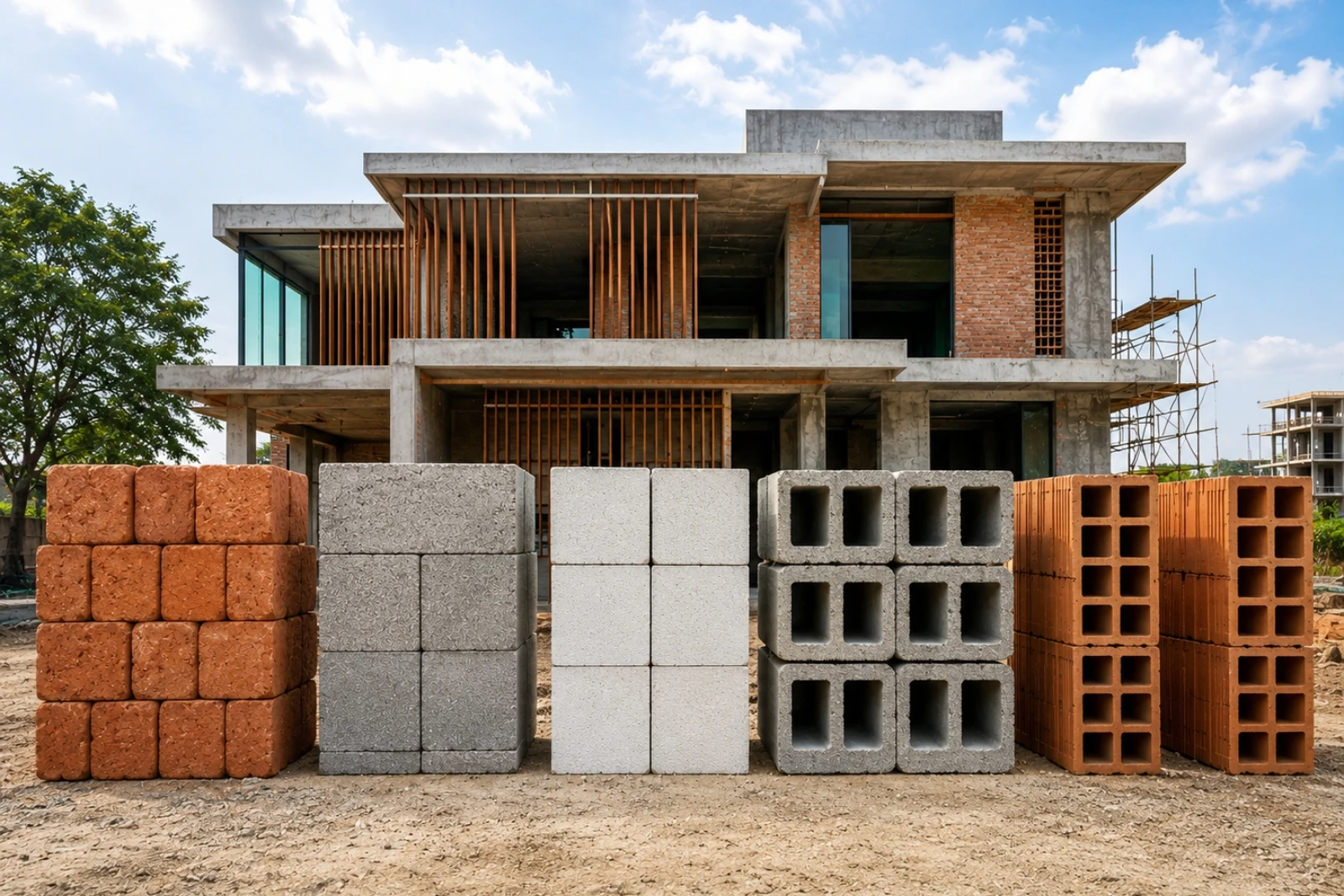
Choosing the right wall material is an important decision when building a home because it affects the building’s durability, thermal performance, water resistance, sound insulation, construction speed, and maintenance. In India, traditional clay bricks are still widely used and remain a reliable and proven option for residential construction. At the same time, alternatives such as Fly Ash Blocks, AAC Blocks, Hollow Blocks, and Porotherm Blocks are also available. The key takeaway is that there is no single wall material that is best for every project. The right choice depends on the quality of the material, climate, construction method, workmanship, budget, and specific requirements of the house.
Clay Bricks – A Proven and Reliable Choice

Good-quality clay bricks may become harder to find in the future as natural clay resources gradually decrease. Over the next 10–15 years, brick availability may change depending on local resources and regulations. Until suitable alternatives become widely available, it is important to use properly manufactured, high-quality bricks. Brick quality directly affects durability because poor-quality bricks can cause cracks, water absorption, and reduced strength.

Fly Ash Blocks – An Alternative to Traditional Bricks
Read More :Double Height Design: Complete Guide
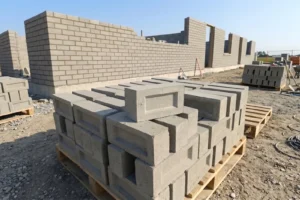
Fly Ash Blocks are an alternative to traditional clay bricks and are available in sizes similar to conventional masonry units. They can be a suitable option when good-quality blocks and skilled workmanship are available. However, the final performance depends on material quality, proper handling, mortar application, curing, and workmanship.
Wire-Cut Bricks – Why Quality Matters

Good-quality wire-cut bricks can be a reliable choice for residential construction. They are made by cutting extruded clay into uniform sizes, which helps achieve consistent dimensions and better wall alignment. However, “wire-cut” does not automatically mean high quality. Always check the brick’s strength, water absorption, firing quality, and dimensional accuracy before use.
AAC Blocks – Lightweight and Fast to Construct
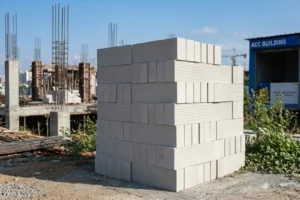
AAC blocks are lightweight and easy to handle, making wall construction faster and reducing the building’s dead load. However, AAC blocks are porous and can absorb moisture, so proper waterproofing, external plastering, surface preparation, and quality exterior paint are essential. Don’t choose AAC blocks based on weight alone; consider the location, moisture exposure, wall detailing, and overall construction system before using them.
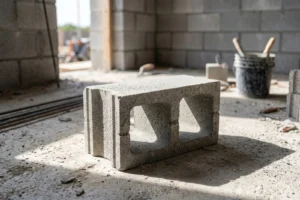
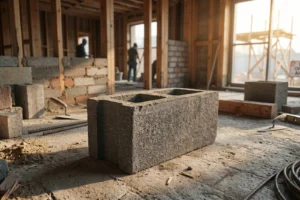
Hollow Blocks – Why Care Is Important
Read More :Double Height Design: Complete Guide
Hollow blocks require careful selection and installation, especially because water entering the internal cavities can cause problems if it is not properly managed. They can also create limitations for plumbing, electrical conduits, wall chases, and fixtures. For residential construction, don’t choose hollow blocks based on low cost alone; consider durability, wall strength, serviceability, and long-term performance.
Porotherm Blocks – A Specialized Wall System
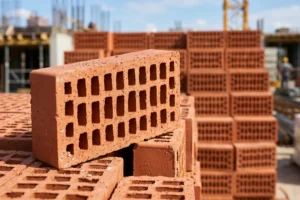
Porotherm is a hollow clay block system designed for specific construction applications, offering potential benefits such as reduced weight and improved thermal performance. However, it requires a proper installation system and skilled workmanship. Since the blocks contain internal cavities, improper detailing can lead to water penetration and finishing problems. Therefore, Porotherm should be used only when the complete wall system is properly designed and executed.

Why We Still Consider Brick the Preferred Choice
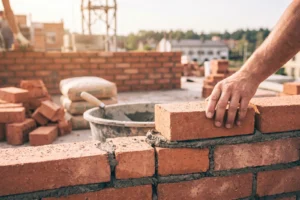
Good-quality clay brick remains a dependable choice for conventional residential construction. Its long history, easy familiarity among construction teams, and proven durability make it a reliable option. However, the decision should not be based only on choosing “brick” over “block.” The quality of the material and the quality of workmanship are equally important for long-term performance.
4.5-Inch Internal Wall vs 9-Inch External Wall
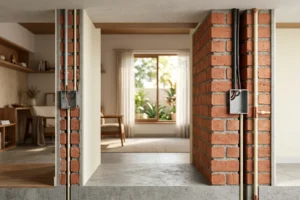
For internal walls, 4.5-inch walls can be suitable for certain partitions, while 9-inch walls are generally preferred for external walls. Since external walls are exposed to rain and weather, thicker walls can provide better water resistance and acoustic performance. In larger luxury homes, 9-inch internal walls can also offer additional strength, service flexibility, and better sound insulation.
Why 9-Inch Walls Can Be Better for Toilets
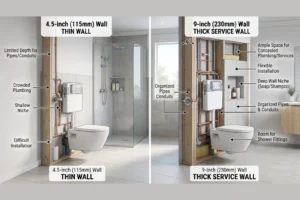
9-inch walls can be more practical for toilet areas because they provide enough depth for plumbing pipes, electrical conduits, shower fittings, and wall niches. A 4.5-inch wall offers limited space for cutting and installing these services, especially when two toilets are located next to each other. In larger homes, thicker walls can provide better service flexibility and easier installation.
Sound Transmission Through Thin Walls
Read More :Double Height Design: Complete Guide
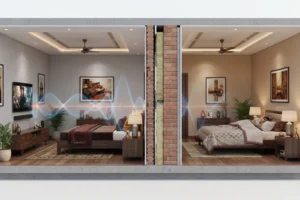
Thin internal walls can allow more sound to pass between rooms, especially from televisions, speakers, and other sound sources. Thicker masonry walls generally provide better sound insulation and privacy. This is particularly important in larger homes with bedrooms, family rooms, and home theatres, where reducing noise transmission is a priority.
Cracks and Thin Walls
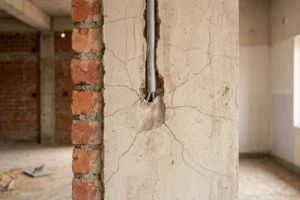
Thin masonry walls can be more prone to cracking, especially when electrical conduits or other services require wall chasing. Hairline cracks can also occur due to movement, plastering issues, differential movement, or poor workmanship. This does not mean every 4.5-inch wall will crack, as proper detailing, materials, reinforcement, plastering, curing, and workmanship are important. Where space and budget allow, thicker walls can provide greater flexibility and robustness.
What About Cavity Walls and Insulation?
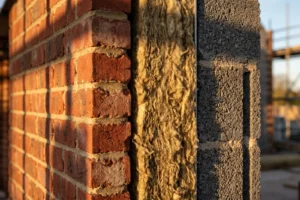
Cavity walls consist of two separate wall layers with a gap between them, where insulation can be added to improve thermal performance. However, they require careful design and detailing, especially in hot and humid climates. Poorly designed cavities can lead to moisture accumulation and pest or insect problems. Therefore, insulation should not be added without considering moisture protection, ventilation, proper detailing, and local climate conditions.
Rat-Trap Bond – Is It Suitable for Every House?
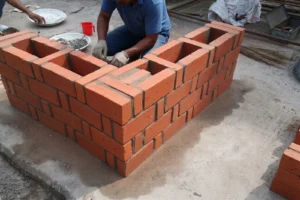
Rat-trap bond is a brick masonry technique that creates internal cavities within the wall, which can help reduce brick and material usage. However, it requires skilled workmanship and proper detailing to achieve good results. For projects where long-term durability and moisture management are important, the wall system should be selected based on the project’s requirements rather than using rat-trap bond simply to save bricks.
External Cladding for Thermal Protection
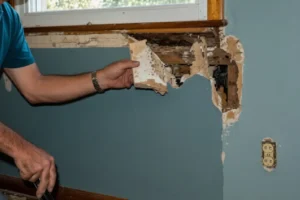
External cladding can help improve a building’s thermal performance by creating a separation between the outer surface and the main wall, which can reduce direct heat transfer. Aluminium-framed cladding with an air cavity can provide both a modern appearance and thermal separation. However, its effectiveness depends on the cladding material, air gap, insulation, installation method, building orientation, and overall wall design.

Light-Coloured Exterior Paint Can Reduce Heat Gain
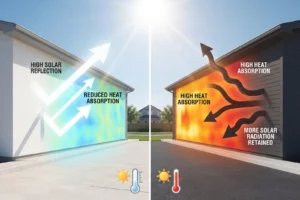
Light-coloured exterior walls can help reduce solar heat absorption, as dark surfaces generally absorb more heat while lighter surfaces reflect more sunlight. White and other light-coloured finishes can reduce heat gain, especially on walls exposed to strong direct sunlight. Using high-quality, weather-resistant exterior paint can also help protect the wall surface from rain and environmental exposure.
Read More :Double Height Design: Complete Guide
Frequently Asked Questions
1. Which wall material is best for house construction?
Brick is still a reliable choice for house construction. But the best wall material depends on your climate, budget, house requirements, material quality, and workmanship.
2. Is AAC block better than brick?
AAC blocks are lightweight and help speed up construction, but they can absorb moisture, so proper waterproofing and surface treatment are important. Bricks remain a reliable choice when durability and weather resistance are the priority.
3. Should internal walls be 4.5 inches or 9 inches?
4.5-inch walls can be suitable for some internal partitions, while 9-inch walls are generally preferred for external walls. In larger homes, 9-inch internal walls can provide better sound insulation and more space for plumbing and electrical services.
4. Why are 9-inch walls preferred for toilets?
9-inch walls are better suited for toilets because they provide more space for plumbing pipes, concealed fittings, niches, and electrical services. Compared with a 4.5-inch wall, a 9-inch wall offers greater depth and flexibility for service installations.
5. Are hollow blocks suitable for residential construction?
Hollow blocks require careful selection and proper installation. Water can enter the internal cavities, and there may also be limitations for plumbing, electrical work, and other services. So, consider waterproofing, service requirements, and long-term performance before choosing hollow blocks.
Final Thoughts
There is no single wall material that is best for every project. Clay bricks, Fly Ash Blocks, AAC Blocks, and Porotherm Blocks all have their own advantages and limitations. For residential construction, good-quality brick remains a reliable choice. However, the final decision should consider the house size, climate, wall thickness, plumbing, sound insulation, budget, and workmanship. Most importantly, material quality and construction quality matter equally.
Watch the full video on YouTube for detailed insights :