Introduction
Choosing the right air conditioning system for your home is essential for maintaining indoor comfort. Today, several types of air conditioners are available, including High Wall Split AC, Cassette AC, Ducted AC, VRF Systems and Chilled Water Systems. Each system has different features, installation requirements, advantages and limitations. Understanding these differences will help you select the best AC for your home based on room size, architectural design, cooling requirements and budget.
How Does an Air Conditioner Work?
Read More : How to Create a Luxury Home Look on a Low Budget
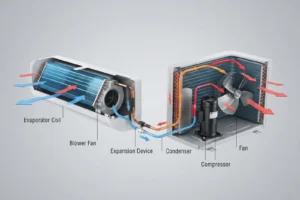
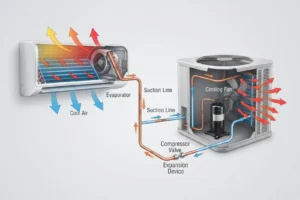
An air conditioner removes heat from the indoor space and transfers it outside to create a comfortable indoor environment. It uses a refrigerant that circulates between the indoor and outdoor units through copper pipes. The indoor unit absorbs heat from the room, while the outdoor unit releases that heat into the surrounding atmosphere.
Evaporator Coil: The evaporator coil is located inside the indoor unit. It absorbs heat from the indoor air as the refrigerant evaporates inside the coil.
Blower Fan: The blower fan draws warm air from the room through the evaporator coil and circulates cooled air back into the indoor space.
Compressor: The compressor is located in the outdoor unit. It increases the pressure and temperature of the refrigerant vapour.
Condenser Coil: The condenser coil releases the absorbed heat into the outdoor atmosphere and allows the refrigerant to condense into liquid.
Refrigerant: Refrigerant is the working fluid that circulates through the air conditioning system and transfers heat from one place to another.
Expansion Device: The expansion device reduces the refrigerant pressure and temperature before it enters the evaporator coil.
How Does the Cooling Cycle Work?
The air conditioning cooling cycle involves four stages: Evaporation, Compression, Condensation and Expansion. During Evaporation, the refrigerant absorbs heat from indoor air. The Compressor then increases its pressure and temperature. During Condensation, the refrigerant releases heat outside. Finally, the Expansion Device reduces its pressure and temperature, allowing the cooling cycle to repeat.
Why Are There Different Types of Air Conditioners?
Different buildings have different cooling requirements. A small bedroom, a luxury villa, a hotel, a shopping mall and a cinema theatre cannot always use the same air conditioning system. The selection depends on building size, number of rooms, cooling capacity, ceiling design, interior requirements, installation cost and maintenance needs. This is why different air conditioning systems are designed for residential and commercial applications.
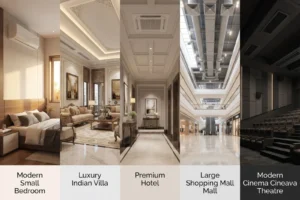
Different Types of Air Conditioners
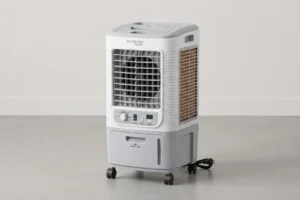
Desert Cooler (Evaporative Cooler) : A Desert Cooler is a basic cooling appliance that works through water evaporation. It contains water-soaked cooling pads, a water tank and a blower fan. When hot air passes through the wet cooling pads, water evaporates and absorbs heat from the air, producing cooler air. Desert coolers are suitable for hot and dry climates, such as Rajasthan and other arid regions. However, they are generally unsuitable for warm and humid climates like Chennai because they increase indoor humidity and their cooling effectiveness reduces when the air already contains high moisture.
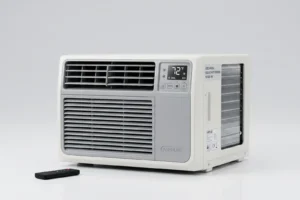
Window AC : A Window AC combines the indoor and outdoor components into a single unit. It is generally installed in a window opening or a specially designed wall opening. One side faces the room, while the other side releases heat outside. The main advantages of Window AC are its simple installation, affordable cost and easy maintenance. However, it produces more noise compared to many split AC systems, occupies window space and may cause vibration during operation. It is suitable for existing buildings, small rooms and budget-friendly installations.
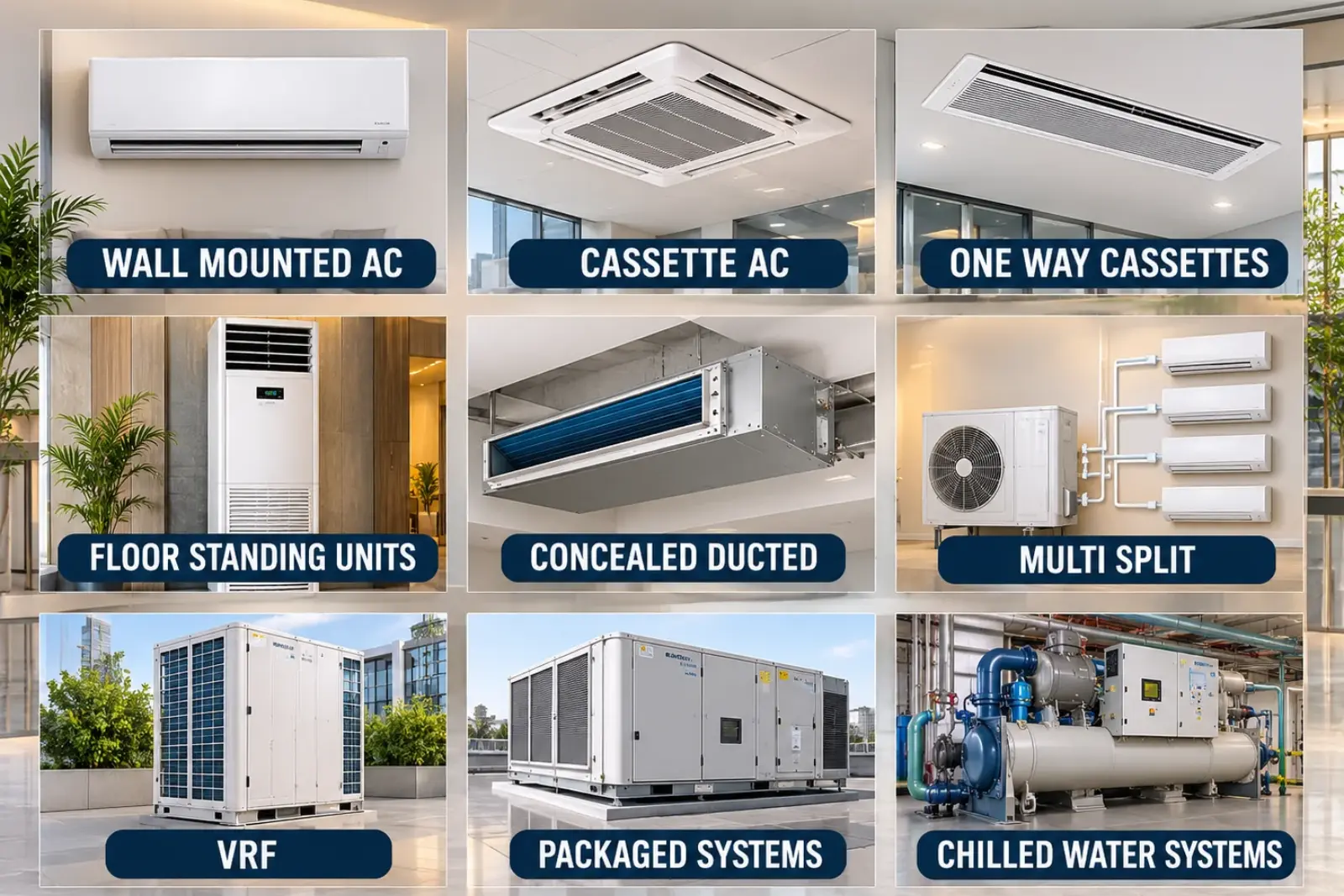
Split AC : A Split AC consists of two separate units: an indoor unit and an outdoor unit connected through refrigerant pipes and electrical connections. It is one of the most commonly used air conditioning systems in residential buildings. Split AC systems are available in different configurations depending on the room layout, cooling requirements and architectural design. The main types include High Wall Split AC, Four-Way Cassette AC, One-Way Cassette AC, Floor-Standing AC and Concealed Ducted Split AC.
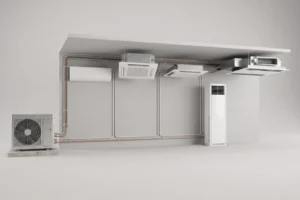
High Wall Split AC : High Wall Split AC is the most commonly used air conditioning system in residential buildings. It is installed high on the wall, generally around 7–8 feet from the floor, depending on the room design and manufacturer’s recommendations. Its main advantages are affordable cost, simple installation and easy maintenance. However, it occupies visible wall space and may not provide uniform air distribution in large or irregularly shaped rooms. It is generally suitable for individual bedrooms, small living rooms and houses with two or three air-conditioned rooms.
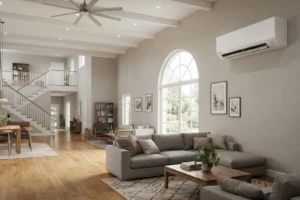
Four-Way Cassette AC : Four-Way Cassette AC is installed within the false ceiling, with its decorative panel visible below the ceiling. It distributes cooled air in four directions, providing relatively uniform air distribution across larger spaces. It does not occupy wall space and provides a clean interior appearance. However, it requires sufficient false ceiling space, proper coordination with lights and ceiling fans, and careful drainage planning. It is particularly suitable for large living rooms, dining rooms and family areas in luxury homes.
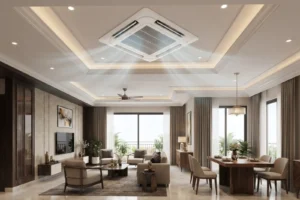
One-Way Cassette AC : One-Way Cassette AC is a ceiling-mounted air conditioning system that distributes cooled air in only one direction. It is useful when the room layout or ceiling design does not allow a four-way air distribution arrangement. It can be installed near a corner or along a suitable ceiling position and offers a clean appearance compared to wall-mounted units. However, it requires false ceiling space and proper drainage planning. It is suitable for bedrooms and smaller spaces where directional air distribution is preferred.

Floor-Standing AC : Floor-Standing AC is a vertical air conditioning unit installed directly on the floor. It is generally used in spaces that require higher cooling capacity and where ceiling installation is difficult. Its main advantage is easy access for maintenance and servicing. It does not require false ceiling installation and can be positioned according to the room layout. However, it occupies floor space and may affect furniture arrangements. It is suitable for conference halls, auditoriums, large halls and commercial spaces.

Concealed Ducted Split AC : Concealed Ducted Split AC is a type of split air conditioning system in which the indoor unit is hidden above the false ceiling. Cooled air is distributed through ducts and supplied into the room through diffuser or grille openings. It provides a seamless interior appearance because the indoor unit remains hidden. It also allows air distribution through multiple outlets, making it suitable for large spaces. However, installation requires sufficient ceiling space, ductwork, access panels and proper drainage planning. It is ideal for luxury homes, large living spaces and home theatres. A concealed ducted split AC is not automatically a centralised air conditioning system. It can serve an individual room using its own outdoor unit.

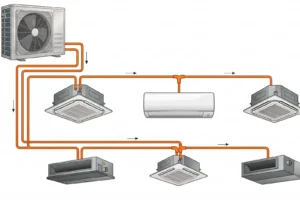
VRF Air Conditioning System : It is an advanced air conditioning system that connects multiple indoor units to one or more outdoor units. Refrigerant flow is adjusted according to the cooling requirements of individual rooms. Each indoor unit can generally be switched on or off independently, and users can set different temperatures for different rooms. VRF systems also support different indoor unit configurations, including High Wall Split, Cassette and Ducted Units. The major advantage of VRF is that it reduces the need for multiple independent outdoor units. It also provides individual room temperature control and advanced automation. However, it requires a higher initial investment, specialised refrigerant piping and trained technicians for installation and maintenance. VRF is particularly suitable for large luxury homes and villas with multiple bedrooms, living rooms and other air-conditioned spaces.
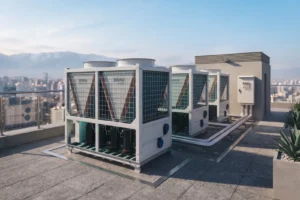
Chilled Water Air Conditioning System : A Chilled Water System is a large-scale central air conditioning solution commonly used in commercial buildings. Unlike conventional split and VRF systems, which circulate refrigerant through indoor cooling coils, chilled water systems use cooled water to transfer heat from indoor spaces. The system generally consists of a chiller, Air Handling Units (AHUs), cooling towers, pumps, pipes and ductwork. The chiller produces chilled water, which circulates through pipes to different air handling units. These units cool the indoor air and distribute it through ducts to the required spaces. Chilled water systems are suitable for shopping malls, hospitals, hotels, cinema theatres, educational institutions and large commercial buildings. They support centralised cooling management but require higher initial investment, dedicated equipment space and specialised maintenance.
Multi-Split AC : Multi-Split AC connects multiple indoor units to a single outdoor unit. It is useful when several rooms require cooling but installing separate outdoor units is difficult. Its operating capabilities depend on the system configuration and the number of connected indoor units.
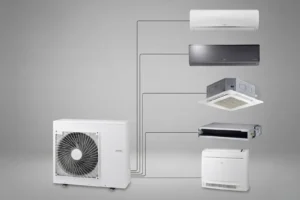
Packaged AC : Packaged AC combines major refrigeration components into a single packaged unit. Conditioned air can be distributed through ducts to different areas. It is commonly used in commercial and industrial applications where larger cooling capacities are required.

Which Air Conditioner Is Best for Your Home?
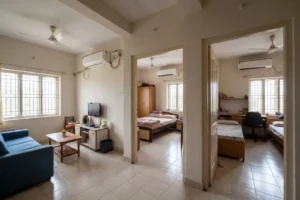
Best AC for Small Homes with 2–3 Bedrooms : High Wall Split AC is generally a practical and affordable option for small and medium-sized homes. It is easy to install, simple to maintain and suitable for individual bedrooms and small living spaces.
Best AC for Luxury Homes with False Ceilings : Cassette AC is a suitable option for architecturally designed luxury homes with false ceilings. Four-way cassette units can be considered for large living and dining spaces, while one-way cassette units are useful for rooms requiring directional air distribution.
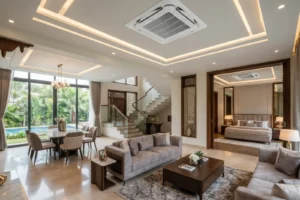
Best AC for Large Living Rooms and Home Theatres : Four-Way Cassette AC or Concealed Ducted Split AC can provide suitable cooling solutions for large living rooms, dining areas and home theatres. The final selection depends on ceiling design, room dimensions and air distribution requirements.
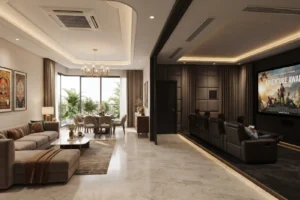
Best AC for Large Luxury Villas with Multiple Rooms : VRF Air Conditioning System is often suitable for large luxury villas with multiple bedrooms, living spaces and home theatres. It connects multiple indoor units to a common outdoor system and allows individual room temperature control.

Conclusiones
There is no single AC system that suits every home. The right choice depends on building design, cooling requirements, budget and number of rooms. High Wall Split AC is suitable for smaller homes, while Cassette AC and Concealed Ducted AC are ideal for luxury homes with false ceilings. VRF Systems are suitable for large villas with multiple rooms, whereas Chilled Water Systems are commonly used in large commercial buildings. Selecting the right AC during architectural planning ensures better comfort, efficient space utilisation and easy maintenance. At Ansari Architects, we believe a well-designed home should combine aesthetics, functionality and comfort.
Read More : How to Create a Luxury Home Look on a Low Budget
Frequently Asked Questions (FAQs)
1. Which type of air conditioner is best for a home?
High Wall Split AC is generally suitable for small and medium-sized homes because it is affordable and easy to install. For luxury homes with false ceilings, Cassette AC or Concealed Ducted AC can be considered. VRF systems are suitable for larger homes with multiple air-conditioned rooms.
2. What is the difference between Split AC and VRF AC?
Split AC generally serves an individual room using a dedicated indoor and outdoor unit. VRF connects multiple indoor units to one or more outdoor units and adjusts refrigerant flow according to individual room cooling requirements. VRF is particularly useful for large homes with multiple rooms.
3. Is Cassette AC better than High Wall Split AC?
Cassette AC provides better integration with false ceilings and can distribute air in multiple directions. High Wall Split AC is generally more affordable, easier to install and suitable for individual bedrooms. The better option depends on the room size, ceiling design and budget.
4. What is the difference between Ducted AC and Centralised AC?
Ducted AC distributes conditioned air through ducts and can operate as an individual split system with its own outdoor unit. Centralised air conditioning generally refers to a larger system serving multiple spaces from a common plant. Chilled water systems are a common example of centralised air conditioning.
5. Which AC system is best for a large luxury villa?
VRF air conditioning is often a suitable option for large luxury villas with multiple bedrooms, living rooms and other air-conditioned spaces. It allows multiple indoor units to connect to a common outdoor system, provides individual room controls and reduces the number of outdoor units required. The final selection should depend on the building layout, cooling load and budget.
Watch the Full Video to Learn More!