Introduction
Many homeowners believe that following Vastu means sacrificing practical design, ventilation, comfort, or modern planning. But the truth is, if you follow a few major Vastu principles correctly, you can achieve almost 90% Vastu compliance without affecting the functionality of your home.In this article, we will explore the most important Vastu concepts in a practical and realistic way.
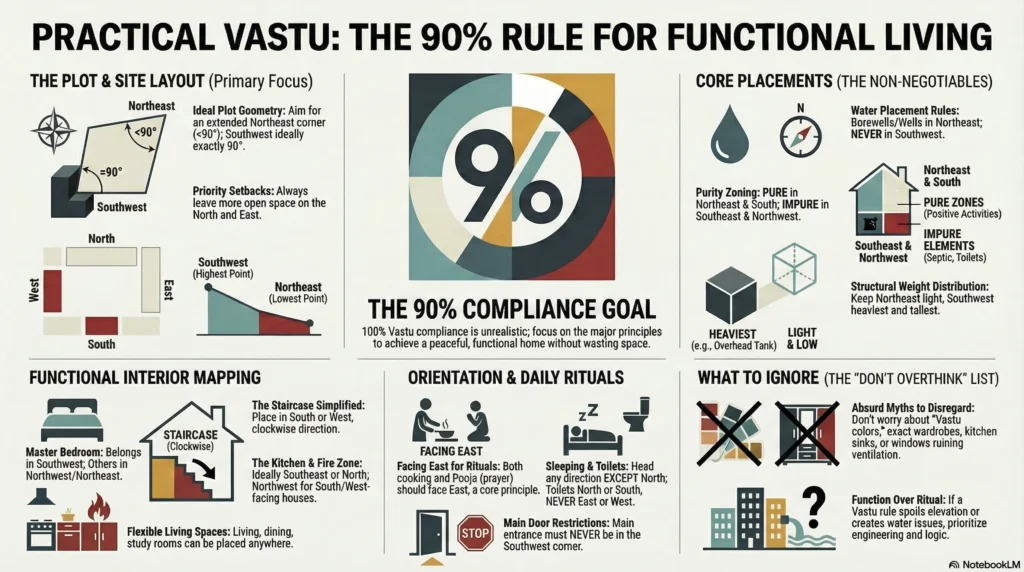
Instead of blindly following every minor rule, the focus is on balancing Vastu, comfort, climate, and everyday living. A home should support your lifestyle, not make life difficult.
Why You Should Focus Only on Major Vastu Principles
Achieving 100% Vastu compliance is nearly impossible in real-world construction. Even experienced Vastu consultants struggle to apply every rule practically. Many rules can conflict with functionality, ventilation, road access, climate conditions, and municipal regulations. The smart approach is to focus only on the major Vastu principles that create balance and positive planning while avoiding unnecessary complications. If you overanalyze every small detail, your daily life and comfort may suffer.
Read More :How to Find the Best Architect in Chennai for Your Dream Home
Best Plot Shape According to Vastu
One of the most important aspects of Vastu is the shape of the plot. A rectangular plot is generally considered the best and most practical shape. According to traditional Vastu principles, the north-east corner should ideally be slightly extended or less than 90 degrees. At the same time, the north-west and south-east corners can be slightly more than 90 degrees. The south-west corner is ideally maintained at exactly 90 degrees.However, modern practical issues must also be considered.
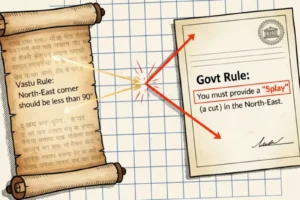
In many cities, corner plots require road-side cuttings or splays for traffic safety, which can technically conflict with Vastu rules. Therefore, once a plot is purchased, there is no need to panic or waste usable land just to satisfy extreme interpretations of Vastu. The most important factors are choosing a good location, ensuring proper ventilation, and maintaining practical usability.
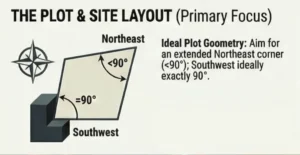
Does Plot Direction Really Matter?
Many people worry excessively about buying south-facing or west-facing plots. In reality, every direction has its own advantages and disadvantages. South-facing homes can receive excellent airflow and natural ventilation depending on the climate. East-facing and north-facing plots are often preferred in Vastu, but practical design matters more than direction alone. A well-designed home with proper ventilation, sunlight, and planning will always perform better than a poorly planned house built only for Vastu compliance.
Read More :How to Find the Best Architect in Chennai for Your Dream Home
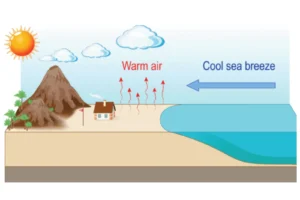
Vastu Rules for Open Space and Setbacks
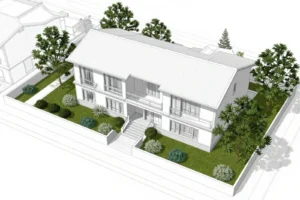
According to Vastu, more open space should ideally be provided on the north and east sides of the property, while less space is usually recommended on the south and west sides. In practical planning, even a small difference in setback can satisfy this principle. For example, if you provide 5 feet on the north side and 4 feet on the south side, it is usually enough to maintain Vastu balance while still preserving usable building area. The goal should always be practical comfort rather than strict or extreme measurements.
Site Levels and Slope in Vastu
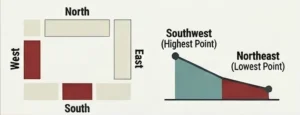
Traditional Vastu suggests that the south-west corner should be the highest point of the site, while the north-east corner should be the lowest point. This concept works easily when roads are located on the north or east side because water drainage becomes practical. But in south-facing or west-facing plots, forcing the site slope according to Vastu can create severe drainage problems and even lead to water logging inside the house. In modern construction, drainage planning and site engineering should always take priority over rigid Vastu interpretations.
Read More :How to Find the Best Architect in Chennai for Your Dream Home
Ideal Water Placement According to Vastu
Vastu traditionally recommends placing water bodies like underground tanks, sumps, or wells in the north-east zone. In practical construction, homeowners can try to keep water-related elements mostly towards the north or east side whenever possible. However, functionality, plumbing layout, and municipal drainage systems must also be considered carefully. The idea is to follow the concept in a practical way rather than forcing impractical placements.
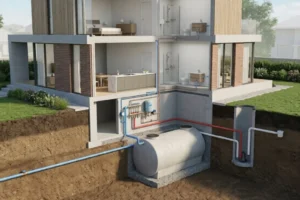
Heavy and Light Zones in a House
Vastu recommends keeping the south-west portion of the house heavier, while the north-east portion should be lighter and more open. This principle can be applied practically by locating heavier structures like overhead water tanks, storage spaces, or the master bedroom towards the south-west side. Meanwhile, lighter areas like car parking, open spaces, or gardens can be placed in the north-east zone. This balance can often be achieved without affecting the beauty or elevation design of the home.
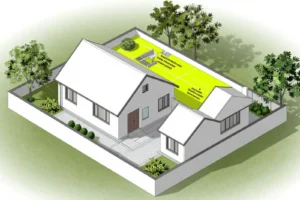
Balcony and Window Placement
According to Vastu, open areas and balconies are generally preferred in the north-east direction. However, climate-responsive architecture often favors south-facing balconies because they provide better breeze and ventilation in many regions. Instead of avoiding south-facing balconies completely, designers can balance both Vastu and climate needs intelligently. Similarly, windows should not be restricted excessively. Proper cross ventilation is essential for comfortable living. The practical approach is to avoid only major violations while still maintaining good airflow and natural lighting.

Staircase Position in Vastu
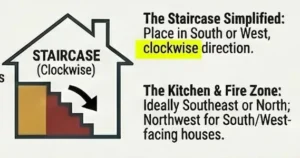
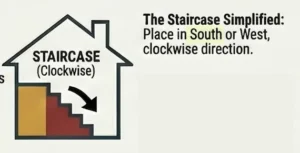
Vastu commonly recommends placing staircases in the south, west, or south-west zones of the house. Staircases are usually avoided in the north-east corner. Clockwise stair movement is traditionally considered preferable. While some people also discuss odd and even step counts, these concepts are often overcomplicated and difficult to apply consistently in real-world construction. Practical staircase design, safety, comfort, and circulation should always remain the priority.
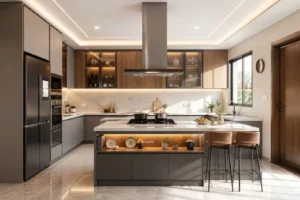
Best Kitchen Position According to Vastu
The south-east direction is traditionally considered the primary location for kitchens. However, the north-west is also accepted as a good kitchen location in Vastu. In fact, for south-facing homes, a north-west kitchen may work better practically while still maintaining Vastu balance. Cooking facing east is another commonly followed Vastu recommendation. Modern kitchen planning should also consider ventilation, service access, workflow efficiency, and plumbing convenience.
Master Bedroom Placement
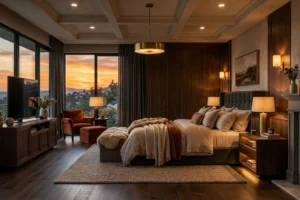
The south-west corner is generally considered the ideal location for the master bedroom in Vastu. However, climatically, west-facing bedrooms can become extremely hot in the evening because walls absorb heat throughout the day. This often increases dependency on air-conditioning and reduces comfort. East-facing bedrooms often provide better thermal comfort and natural morning light. Therefore, climate-responsive design should be balanced carefully along with Vastu principles.
Living Room, Dining Room, and Study Room
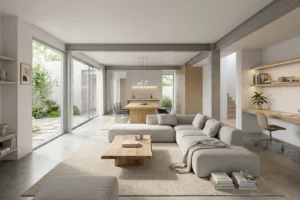
Living rooms and dining rooms are flexible spaces that can work well in almost any direction if designed properly. Study rooms are often preferred in the north-east direction, but this is not a strict requirement. Functionality, lighting, and comfort are far more important than blindly following directional placement.
Pooja Room Placement
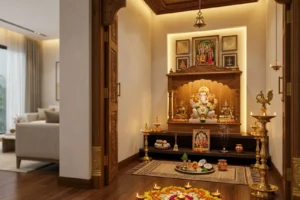
Many people believe the pooja room must strictly be in the north-east corner. In reality, practical limitations often make this difficult. The pooja room can be placed in different locations as long as the space remains peaceful and respectful. Traditionally, idols are often positioned facing east while the person praying faces west. Simple, practical implementation is always better than forcing complicated layouts.
Toilet Placement in Vastu
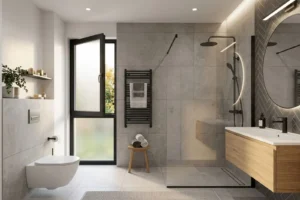
Toilets are generally avoided in the north-east zone according to Vastu principles. In practical home design, toilets should primarily be planned based on plumbing efficiency, privacy, ventilation, and convenience. Dressing areas and attached bathrooms can be arranged intelligently to balance both comfort and Vastu preferences wherever possible.
Main Door Position Confusion in Vastu
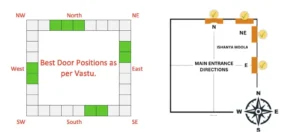
The main entrance is one of the most debated topics in Vastu. Different consultants recommend different entrance positions even within the same direction. The reality is that almost every direction has acceptable entrance positions according to different Vastu interpretations. Therefore, homeowners should focus more on functionality, circulation, security, and convenience rather than becoming anxious about exact door placement. Avoiding extreme south-west positioning is usually considered sufficient.
Bed Direction and Sleeping Orientation
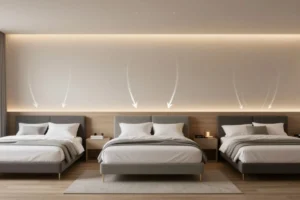
Some Vastu experts recommend avoiding sleeping with the head facing north, while others follow different interpretations. In reality, personal comfort, ventilation, mattress quality, and room temperature affect sleep quality far more than strict directional rules. Homeowners should always prioritize practical comfort.
What You Should Not Follow Blindly in Vastu
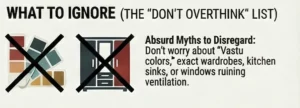
Many modern Vastu rules create unnecessary stress and impractical layouts. Excessive focus on wardrobe direction, exact window positions, door alignments, sink locations, or courtyard placement often reduces the usability of the house. A home should be comfortable, functional, climatically responsive, and visually pleasing. Small compromises in Vastu are completely acceptable if they improve your quality of life.
Ancient Vastu vs Modern Misinterpretation
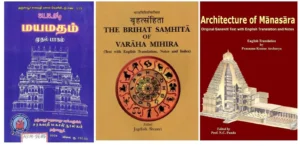
Traditional Indian architectural texts like the Brihad Samhita, Manasara, and Mayamata contain deep architectural knowledge. However, many modern interpretations of Vastu have become exaggerated, commercialized, and disconnected from climate-based architecture and practical living. Studying the original concepts reveals that ancient architecture focused heavily on environment, comfort, proportion, and functionality rather than fear-based rules.
Final Thoughts
Vastu should help improve balance and comfort in a home — not create stress, fear, or impractical spaces. If you focus on the major principles like plot shape, ventilation, open space, drainage, kitchen placement, and room zoning, you can achieve excellent Vastu compliance without sacrificing modern living standards. A well-designed home that respects climate, comfort, and functionality will always create a happier living experience than blindly following every minor Vastu rule.
Choose practical wisdom over fear, and design a home that truly supports your lifestyle.
Watch the full video on YouTube to explore these ideas in detail :