
Introduction
An Open-to-Sky (OTS) courtyard is a popular architectural feature that brings natural light and ventilation into a home. However, many homeowners have a common concern: Will an OTS increase the heat inside the house? The answer depends on how the courtyard is designed. A properly planned open-to-sky courtyard can improve natural ventilation and help hot air escape. However, a courtyard covered with glass without adequate ventilation can trap heat and make the surrounding spaces uncomfortable, especially in hot climates like Chennai. Let’s understand how OTS courtyards work, why heat builds up, and what design solutions can help maintain a comfortable indoor environment.
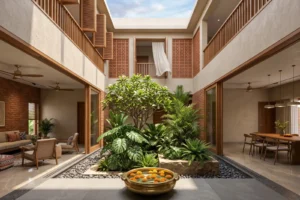
Does an Open-to-Sky Courtyard Increase Heat Inside a House?
Yes, an open-to-sky courtyard can allow direct sunlight to enter the house, increasing temperatures in the courtyard and nearby spaces. The amount of heat depends on the courtyard’s size, orientation, sunlight exposure, surrounding walls, and ventilation. However, an OTS courtyard is not necessarily a source of excessive heat. When designed correctly, it can also improve airflow and help remove accumulated warm air from the house.
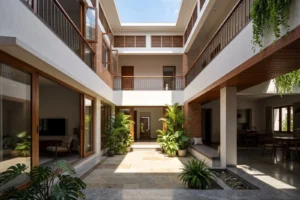
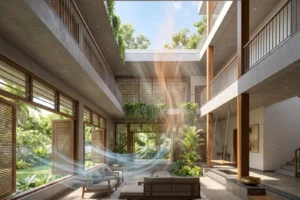
How Does the Stack Effect Work in an OTS Courtyard?
The stack effect is a natural ventilation process in which warm air rises and escapes through a higher opening, allowing cooler air to enter through lower openings. In a well-designed courtyard, warm air can rise through the open space and escape through the upper opening. This movement can help improve air circulation and reduce heat buildup in adjoining rooms. The effectiveness of this process depends on the availability of suitable air inlets, high-level outlets, and a favourable temperature difference. An open courtyard alone does not guarantee effective ventilation.
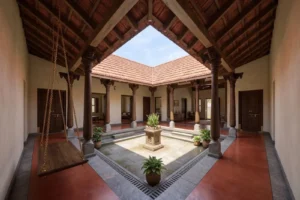
Why Did Traditional Indian Houses Have Courtyards?
Traditional Indian houses often included a central courtyard to bring natural daylight and ventilation into the building. In closely built houses, side windows may not be possible because neighbouring buildings are located near the property boundaries. Openings at the front and rear may not provide sufficient daylight and airflow to the middle of the house. A central courtyard helps address this problem by providing an opening to the sky, bringing natural light into interior spaces and creating a pathway for warm air to rise and escape. This is one reason courtyards have remained an important feature of traditional residential architecture.
Why Do Modern Courtyards Use Glass Roofs?
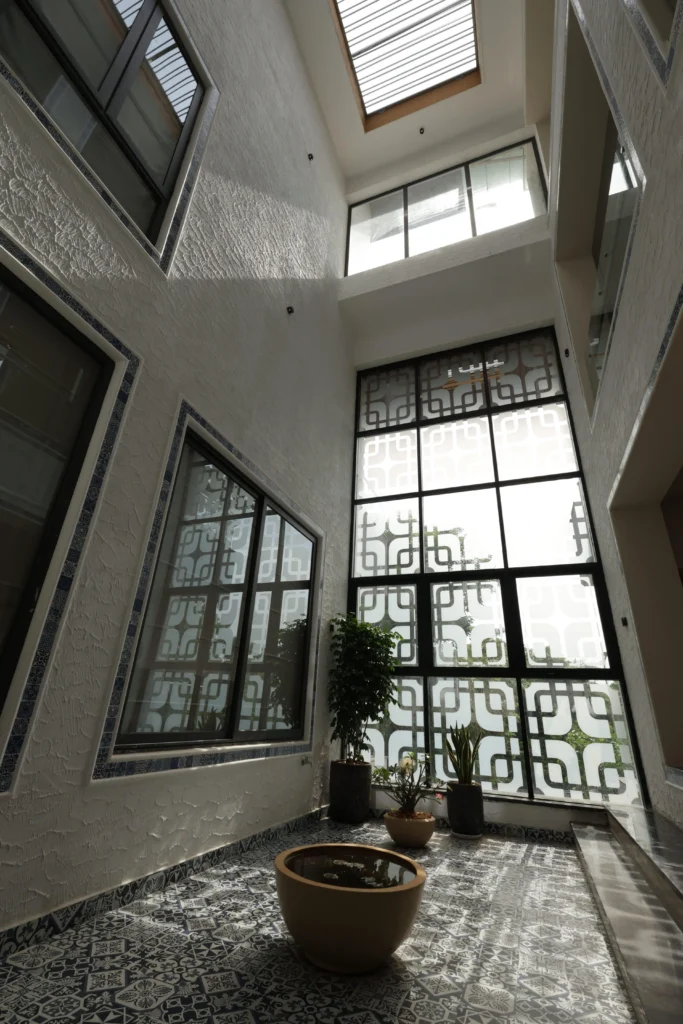
Modern homeowners sometimes cover courtyards with glass to protect the space from rain, dust, insects, and other outdoor elements. Although a glass roof can provide weather protection while allowing daylight inside, it can also increase heat buildup if solar radiation enters the courtyard and the accumulated warm air cannot escape. This may create a greenhouse-like effect, making the courtyard and nearby rooms uncomfortable during hot weather. Therefore, glass coverage should be planned alongside suitable ventilation and solar-control measures.
How Can You Reduce Heat in a Glass-Covered OTS?
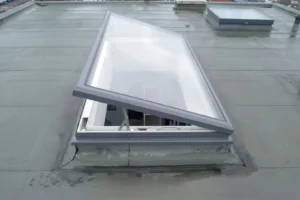
If you prefer a glass-covered courtyard, proper ventilation and heat-control measures are essential to maintain a comfortable indoor environment. Glass roofs allow natural light to enter the house, but direct sunlight can increase temperatures inside the courtyard, especially during hot afternoons. Without adequate ventilation, heat may build up and affect the surrounding rooms, reducing indoor comfort. To minimise heat buildup, the OTS design should consider suitable glazing, effective shading, and proper ventilation to allow hot air to escape. High-level ventilation openings or exhaust fans can help remove accumulated warm air when natural airflow is insufficient. Operable roof systems can also provide flexibility by allowing the courtyard to open to the sky when weather conditions permit. The best solution depends on the courtyard’s dimensions, roof design, orientation, surrounding spaces, budget, and local climate. Careful planning during the architectural design stage helps balance natural lighting, ventilation, rain protection, and thermal comfort, making the glass-covered OTS both functional and comfortable for everyday living.
What Is the Greenhouse Effect in a House?
In a glass-covered courtyard, the greenhouse effect refers to heat buildup when sunlight enters the space and the resulting heat is not removed effectively. Solar radiation can warm the floor, walls, and surrounding surfaces. These surfaces release heat into the space, and inadequate ventilation can allow indoor temperatures to rise. This can make the courtyard feel like an oven during hot afternoons. Proper shading, appropriate glazing, and adequate ventilation help minimise this problem.
What Is the Best OTS Design for Chennai Homes?
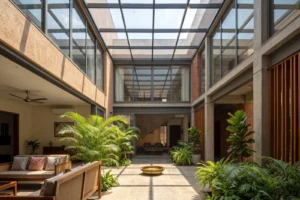
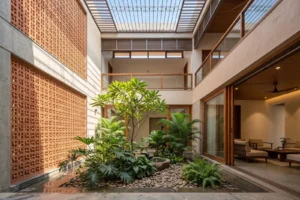
For homes in Chennai’s hot climate, an OTS courtyard should be designed to provide useful daylight and ventilation while limiting unwanted heat gain. An uncovered courtyard with suitable proportions and ventilation openings may work well when rain exposure is acceptable. If weather protection is required, a glass-covered courtyard should include appropriate solar-control measures and a reliable method of releasing hot air. The ideal solution depends on the building layout, orientation, surrounding rooms, and the homeowner’s requirements. An architect can assess these factors and design an OTS courtyard that balances comfort, functionality, and aesthetics.
Frequently Asked Questions (FAQs)
1. Does an OTS courtyard make a house hotter?
It can increase heat in areas exposed to direct sunlight. However, a properly designed open courtyard can also improve natural ventilation and help warm air escape.
2. Is an open-to-sky courtyard better than a glass-covered courtyard?
An open courtyard allows warm air to escape directly and does not trap heat beneath a roof. A glass-covered courtyard offers better protection from rain, dust, and insects, but requires careful planning to control heat buildup.
3. Why do traditional houses have a central courtyard?
Traditional houses use courtyards to bring natural daylight and ventilation into the middle of the building, particularly where side openings are limited.
4. Does a glass roof increase heat inside an OTS?
It can. Direct solar radiation passing through the glass may warm the courtyard and surrounding surfaces. The impact depends on the glazing, shading, orientation, and ventilation.
5. Can exhaust fans reduce heat in a glass-covered courtyard?
Yes. Properly positioned exhaust fans can remove accumulated warm air, especially when suitable openings allow replacement air to enter. Their effectiveness depends on the overall ventilation design.
6. Can we use a retractable glass roof for an OTS?
Operable roof systems can provide flexibility by allowing the courtyard to open when conditions permit and close during rain. The system should be selected based on safety, weather resistance, drainage, maintenance, and cost.
7. Is an OTS skylight suitable for Chennai’s climate?
Yes, if it is designed carefully. Solar shading, appropriate glazing, and ventilation should be considered to prevent excessive heat gain.
Conclusion
An OTS courtyard can improve natural lighting, ventilation, and the architectural character of a home. However, poor planning especially a glass-covered courtyard without adequate ventilation can cause excessive heat buildup. The key is to balance sunlight, airflow, shading, and weather protection from the design stage itself. A well-planned OTS can be both beautiful and comfortable for everyday living. If you find this information useful, subscribe to our YouTube channel, share this article with anyone planning to build a house, and leave your questions in the comments. Your support encourages us to create more practical content about architecture and home construction.
Want to learn more? Watch our YouTube video now!