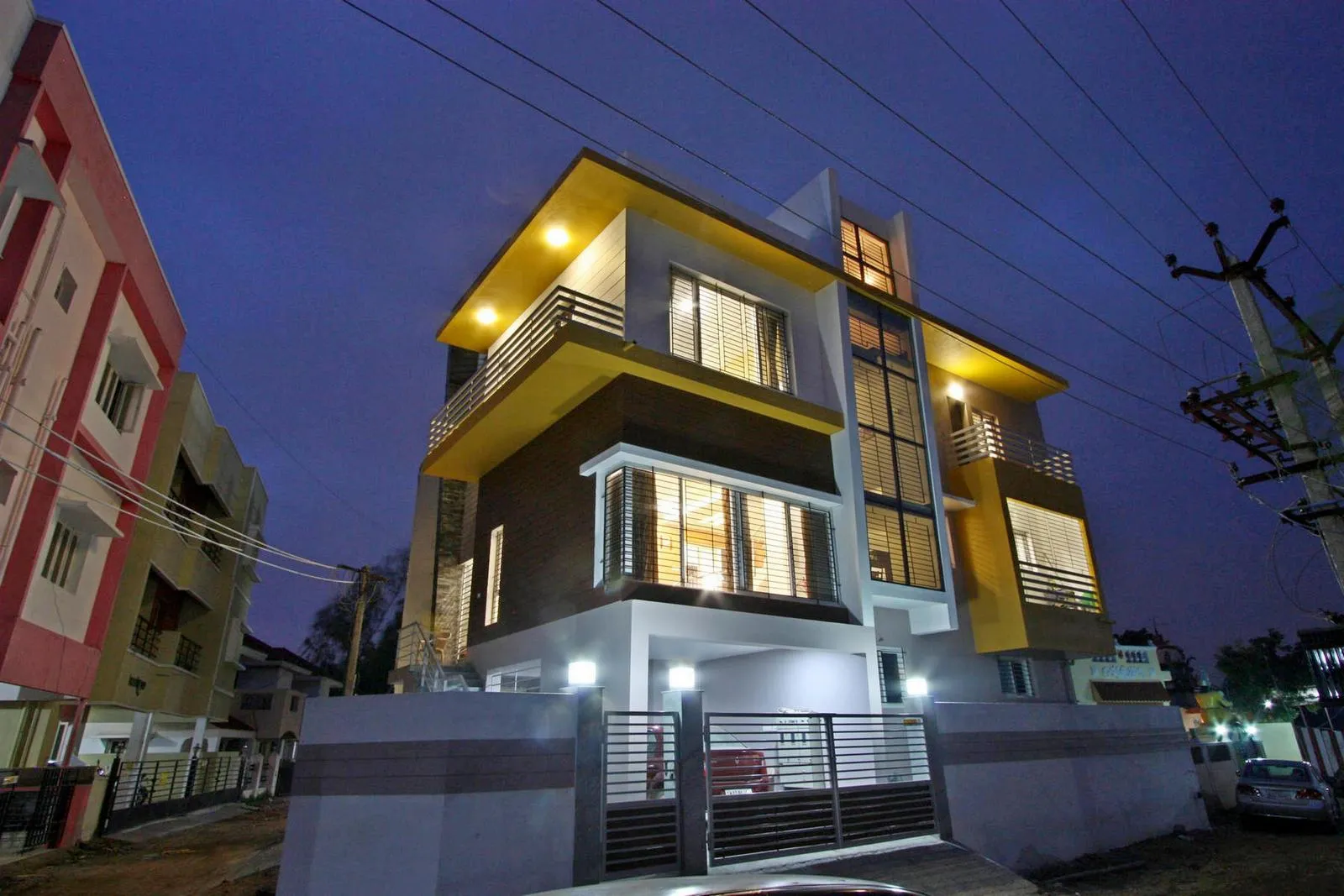
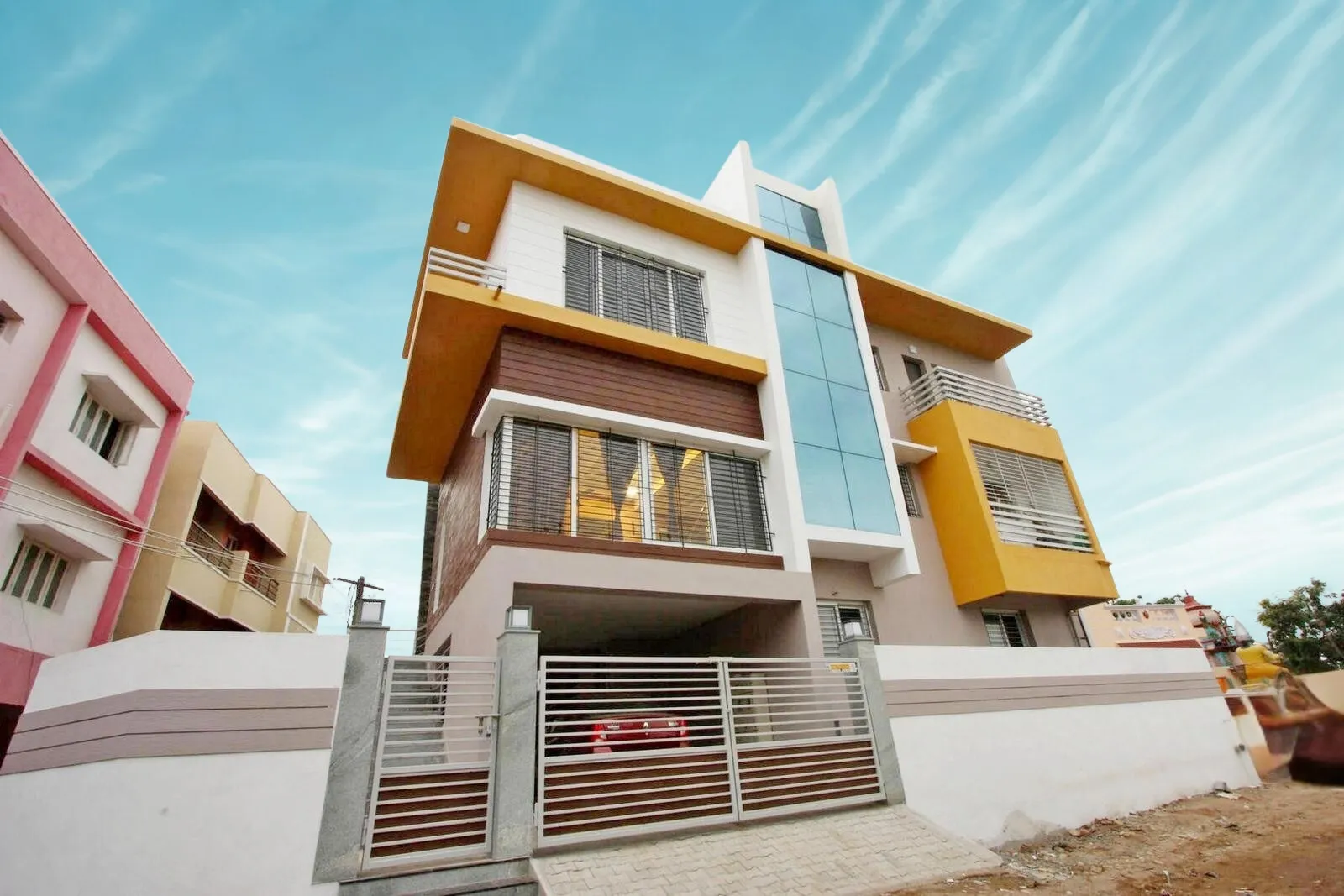
Lake View Houses – The house is oriented toward a serene and expansive lake located on its western side. This natural feature becomes a major visual asset for the project, offering uninterrupted views and a strong connection to the surrounding landscape. From the very beginning, the design intent was to maximize this scenic advantage and ensure that the primary living spaces benefit from the lake-facing orientation.
Climate Challenge – West-Facing Exposure
While the west-facing orientation provides the best views, it also presents a significant climatic challenge, especially in Chennai’s hot and humid conditions. The western sun is particularly harsh during the afternoon hours, leading to excessive heat gain. Large glass openings on this side can result in increased indoor temperatures, glare, and higher energy consumption, making careful design intervention essential.
Sunlight Study & Environmental Analysis
To resolve this conflict between view and climate, a detailed sunlight and solar path study was conducted using computer-based simulation software. This study analyzed the sun’s direction, angle, and intensity at different times of the day and across various seasons throughout the year. The data allowed us to understand how sunlight interacts with the building envelope over time.
Facade Design & Shading Strategy
Based on the simulation outcomes, window sizes, locations, and shading devices were precisely calibrated. Large openings were strategically positioned only where they could be effectively shaded. Cantilevered sunshades were introduced to block direct solar radiation while still allowing diffused daylight and uninterrupted views of the lake. The combination of windows and sunshades ultimately became the defining architectural element of the façade.
Overall Massing & Building Levels
The house is designed as a three-level structure to efficiently utilize the site and respond to functional requirements. The vertical zoning clearly separates public, private, and service areas, ensuring both privacy and practicality without compromising spatial quality.
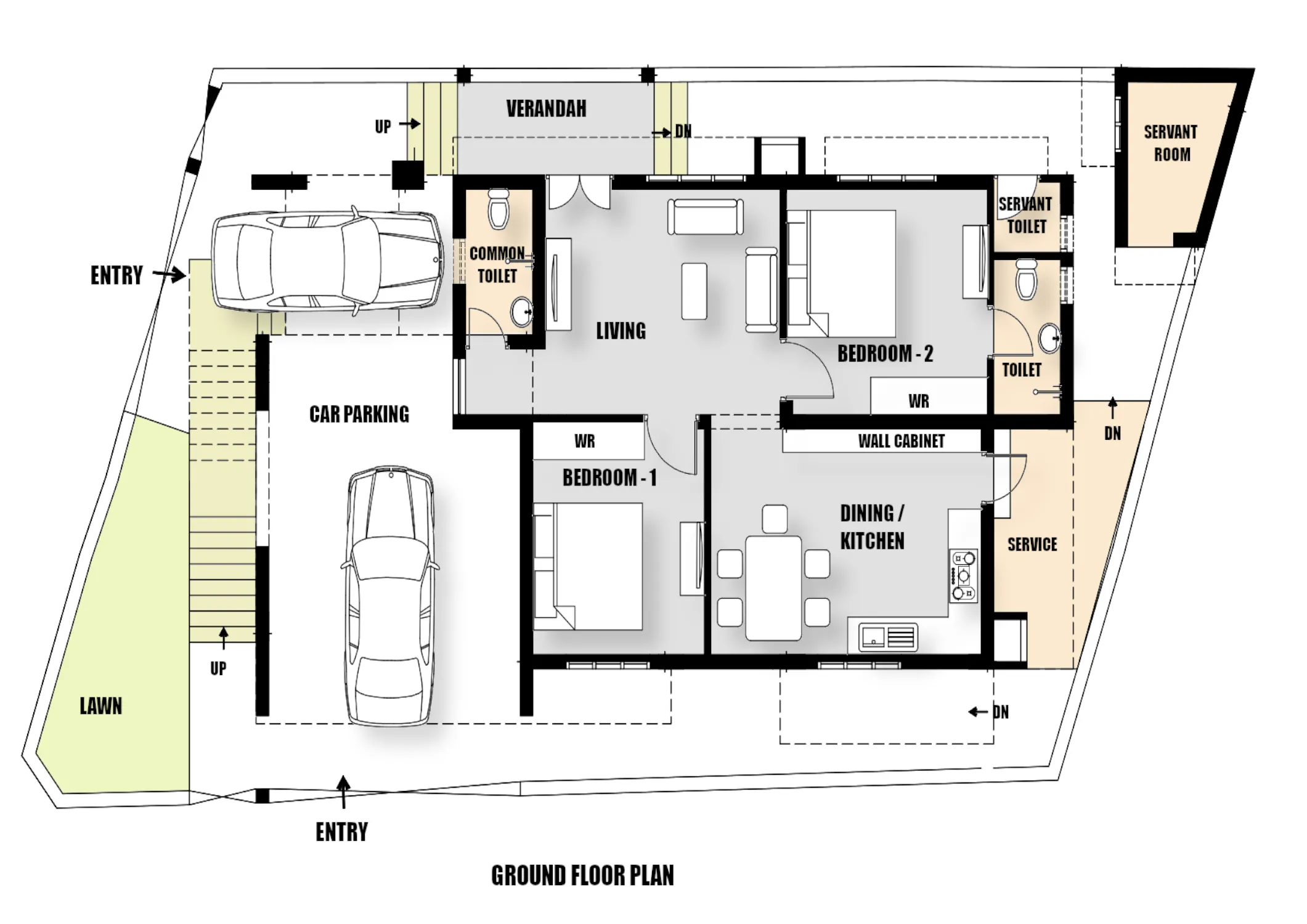
Ground Floor – Parking & Rental Unit
The entire ground floor is dedicated to car parking along with a compact rental unit. This level is planned independently from the main residence, allowing rental occupants to have their own access while maintaining complete privacy for the homeowners.
Primary Residence – First & Second Floors
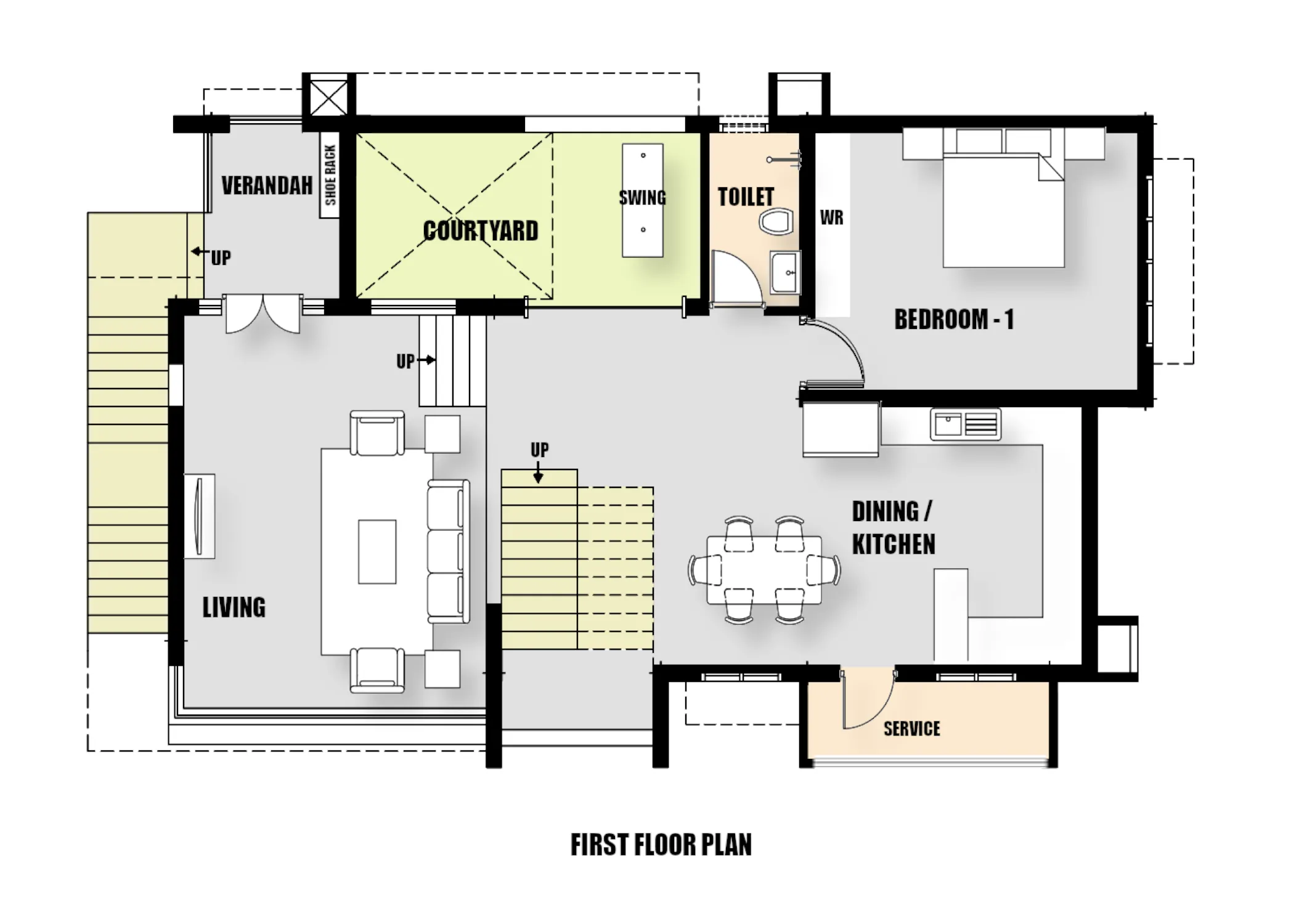
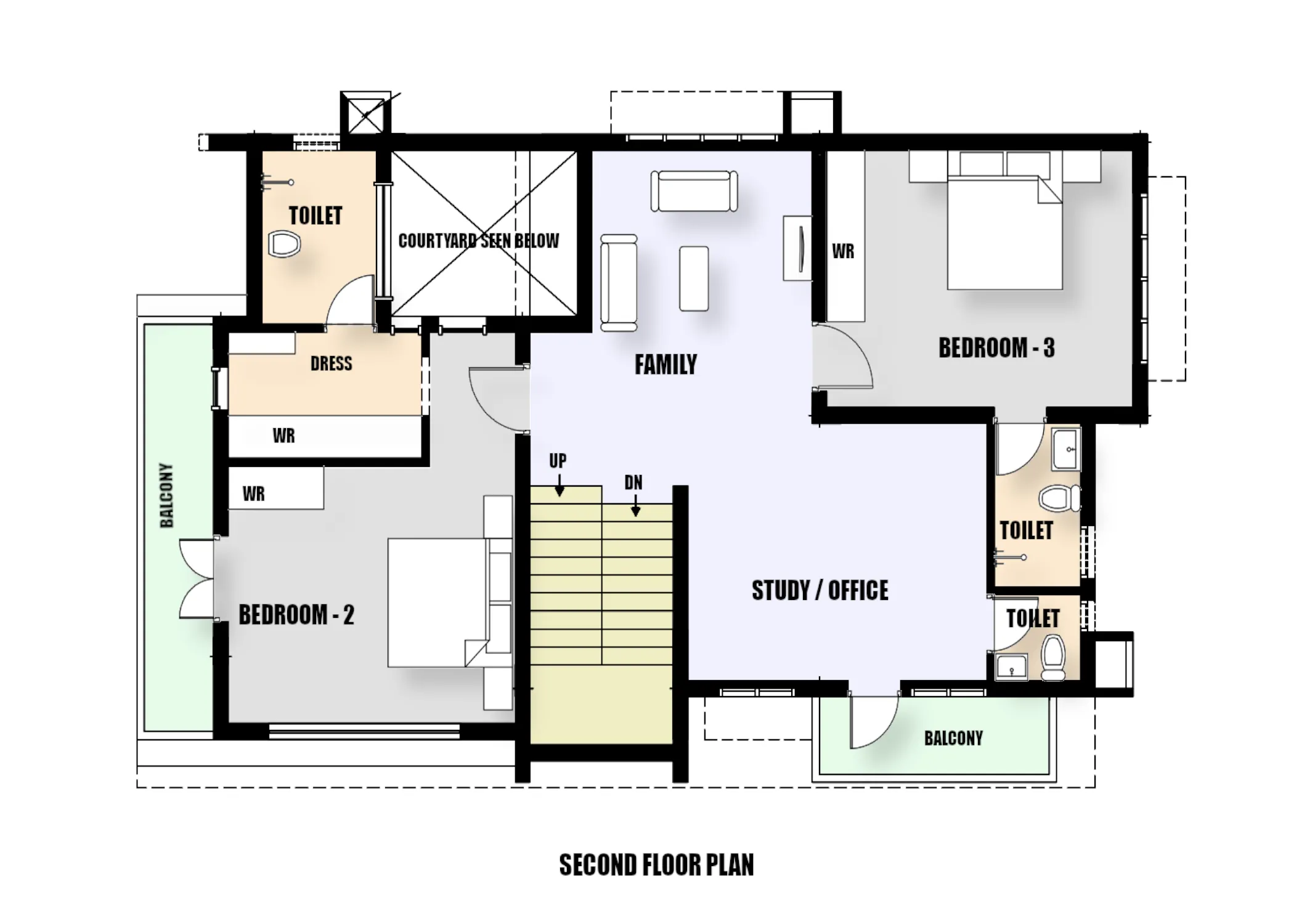
The main house occupies the first and second floors. These levels are designed to function as a single cohesive home, connected visually and spatially through double-height elements, open planning, and controlled level differences.
Sunken Living Room Concept
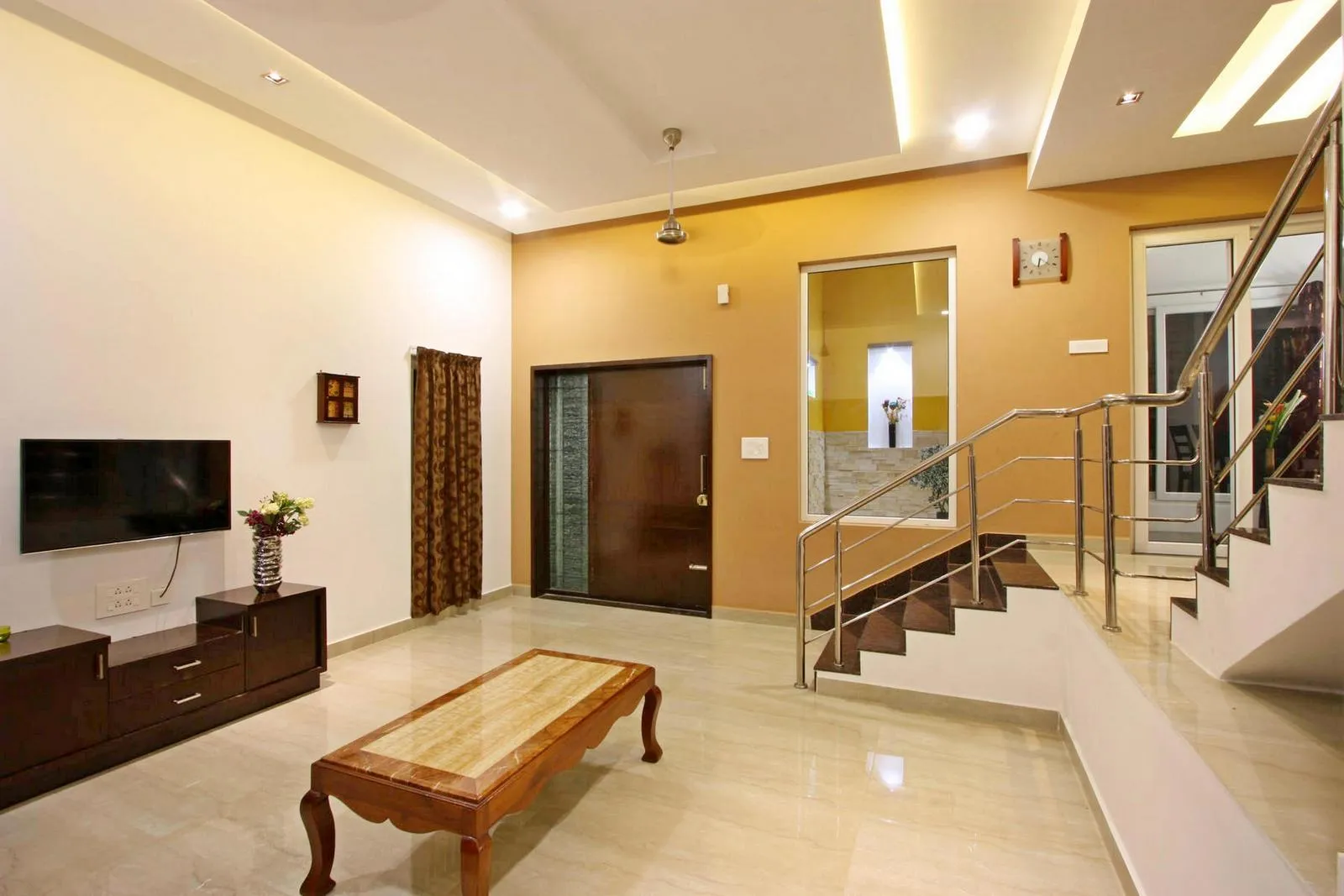
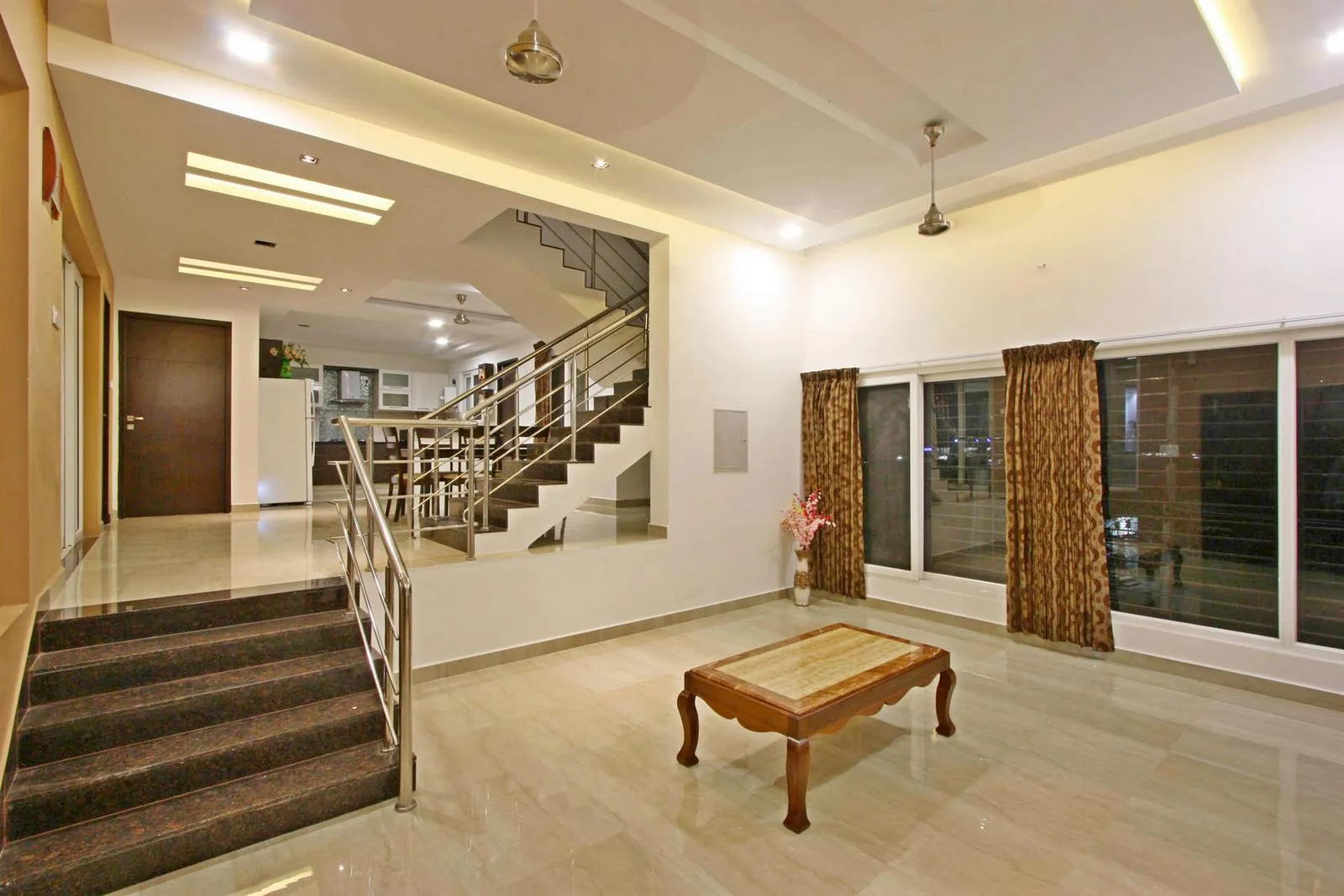
The living room is designed at a slightly lower level compared to the rest of the house. This intentional level difference creates a sense of volume and visual drama. The increased ceiling height makes the living space feel grand and spacious, enhancing the overall experience.
Ease of Access & Human Scale
Another advantage of the split-level approach is improved accessibility. From the road level, one climbs only about seven feet to enter the living room, making the transition feel comfortable rather than strenuous. The rest of the house is placed at a slightly higher level, maintaining an approachable and human-scaled internal circulation.
Central Courtyard & Skylight
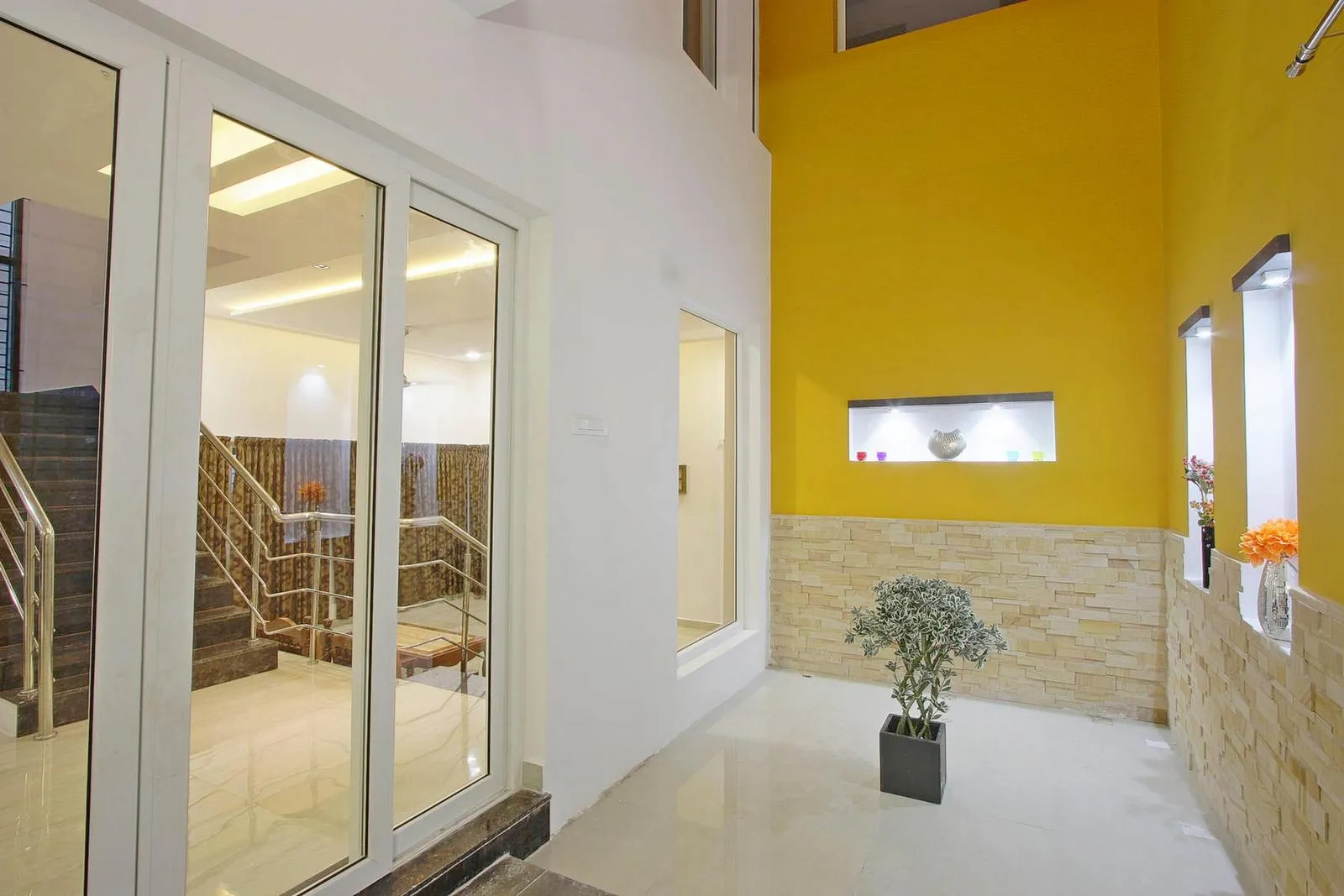
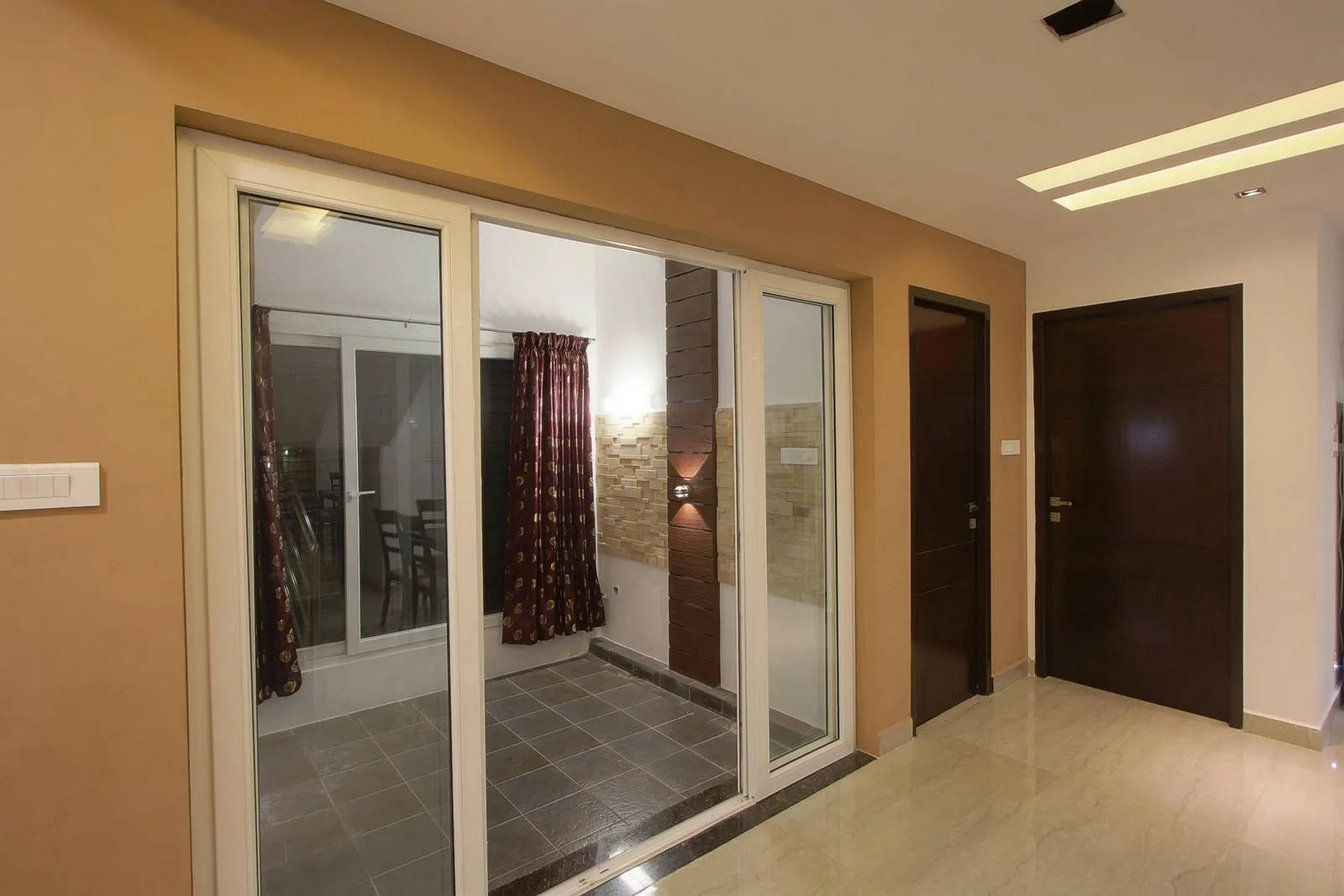
A small yet impactful courtyard is introduced at the center of the house. This courtyard acts as a natural light well, bringing ample skylight deep into the interior spaces. In addition to daylight, it introduces a touch of greenery, improving indoor air quality and creating a calming visual break within the home.
Kitchen & Open-Concept Planning
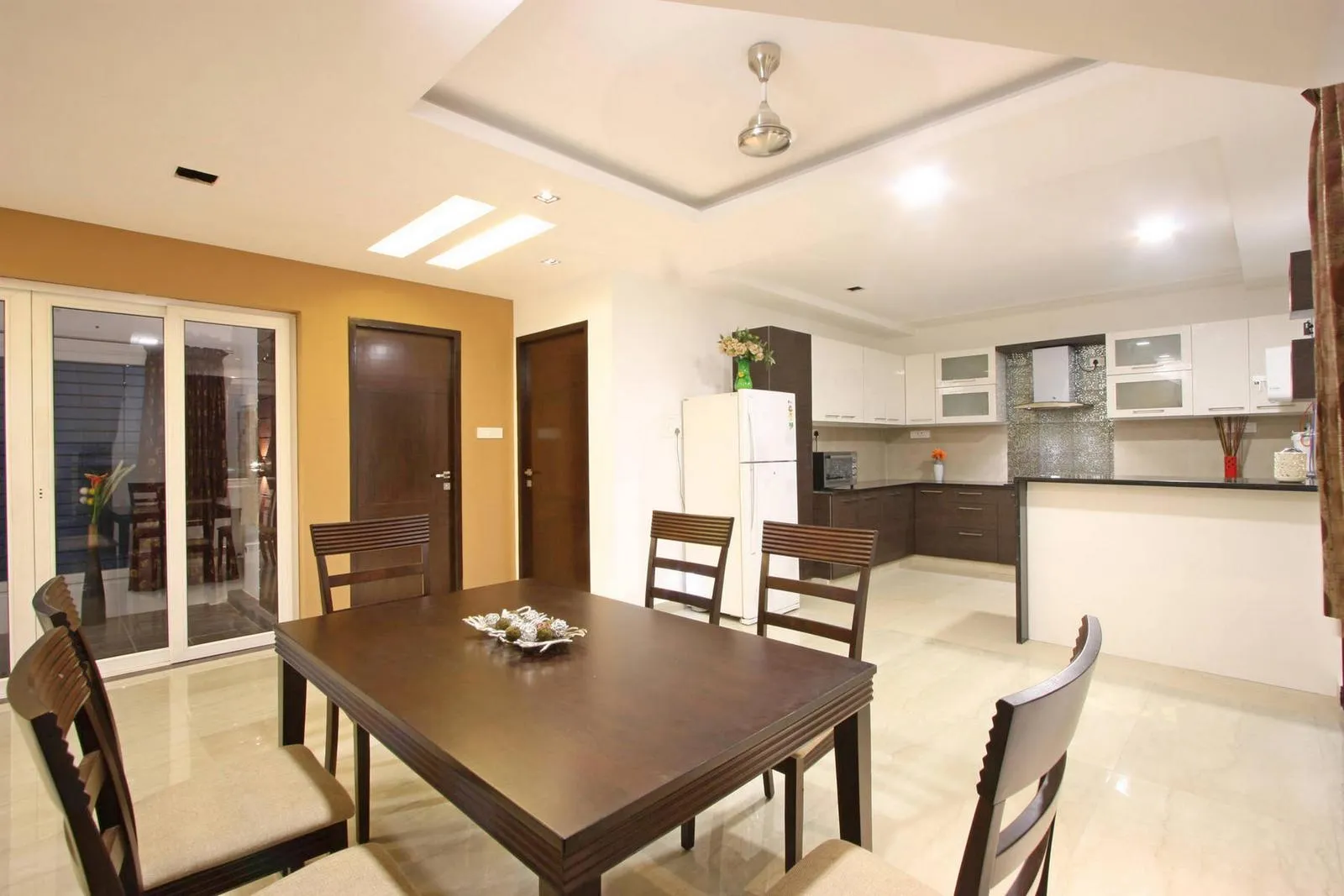
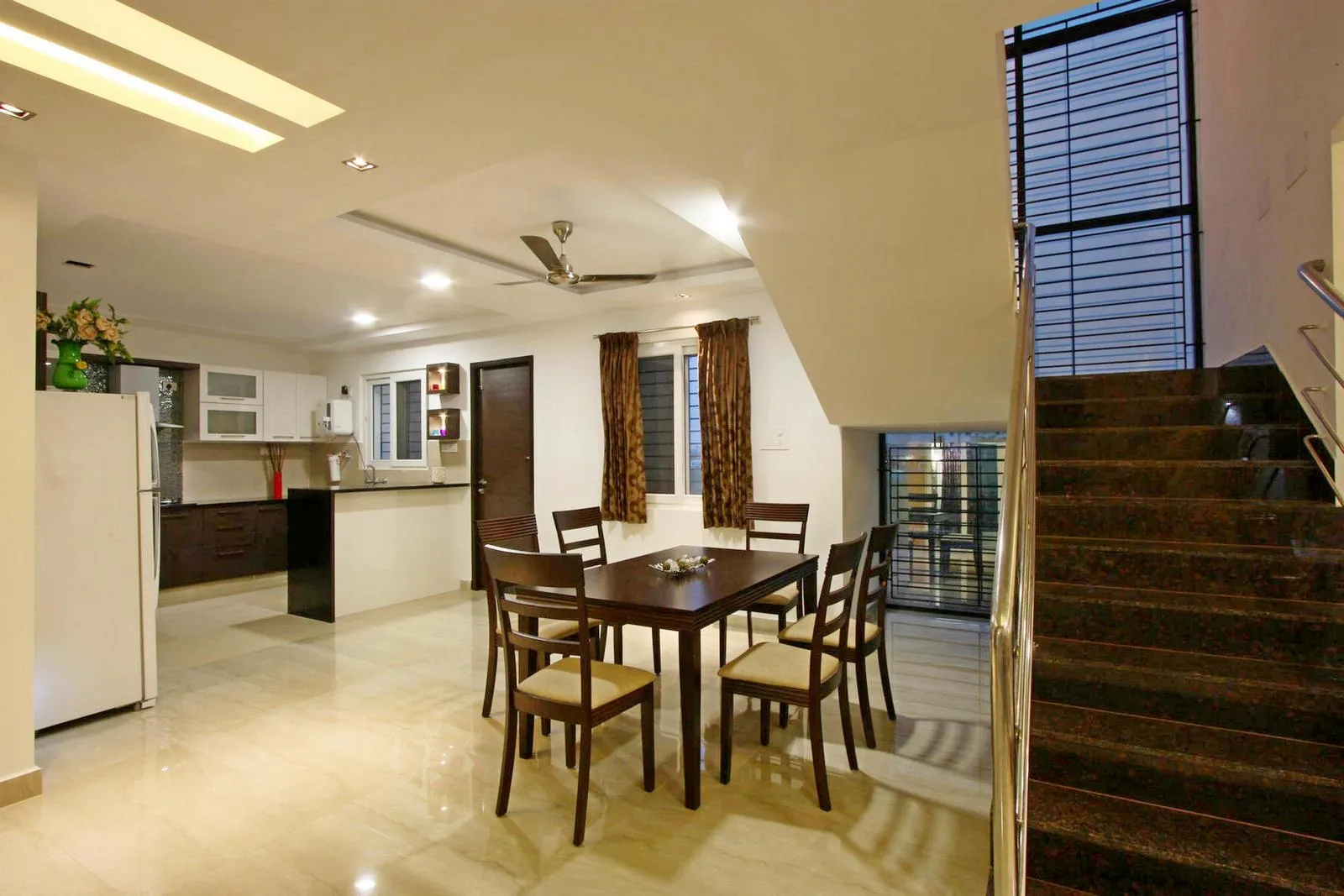
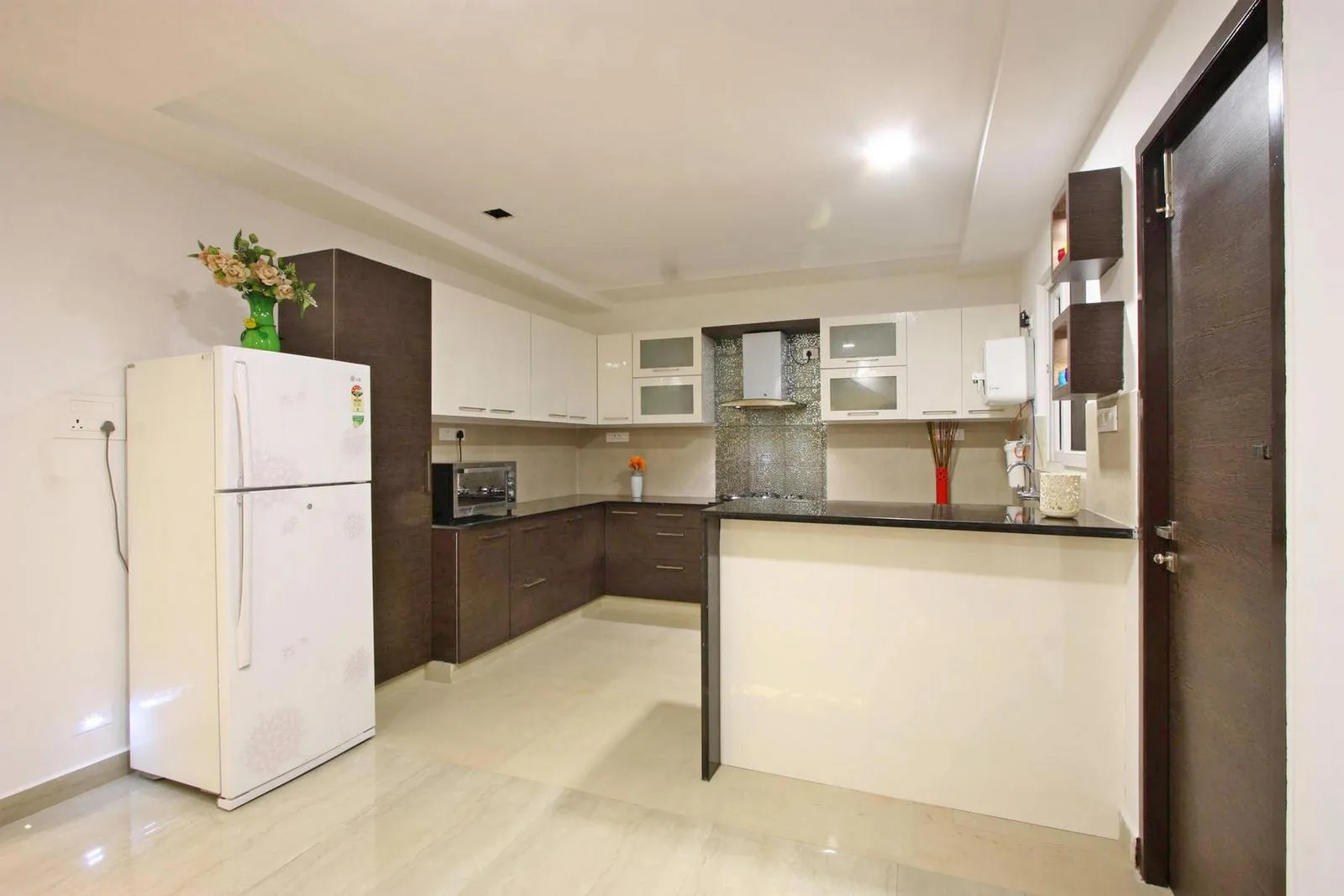
The kitchen is designed as an open kitchen to enhance spatial continuity. By avoiding rigid partitions, the house adopts an open-plan concept that visually connects the living, dining, and kitchen areas. This approach makes the home feel expansive and welcoming as soon as one enters.
Staircase & Vertical Connection
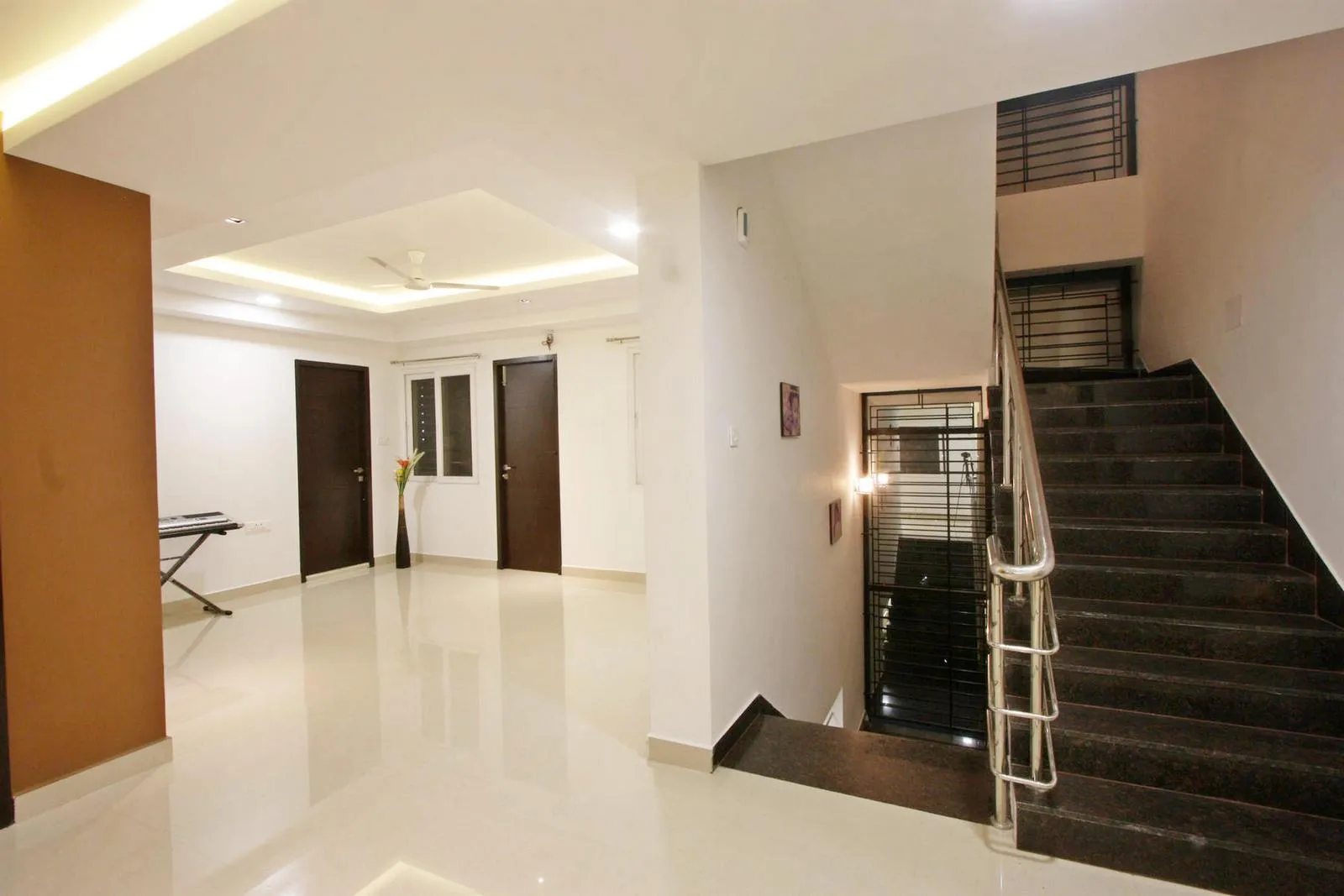
The staircase connecting the first and second floors is treated as an architectural feature rather than a mere circulation element. A tall glass window runs alongside the staircase, allowing abundant natural light to spill into the dining area. This creates a dynamic play of light and shadow and makes moving between floors a pleasant experience.
Second Floor – Bedrooms with Lake Views
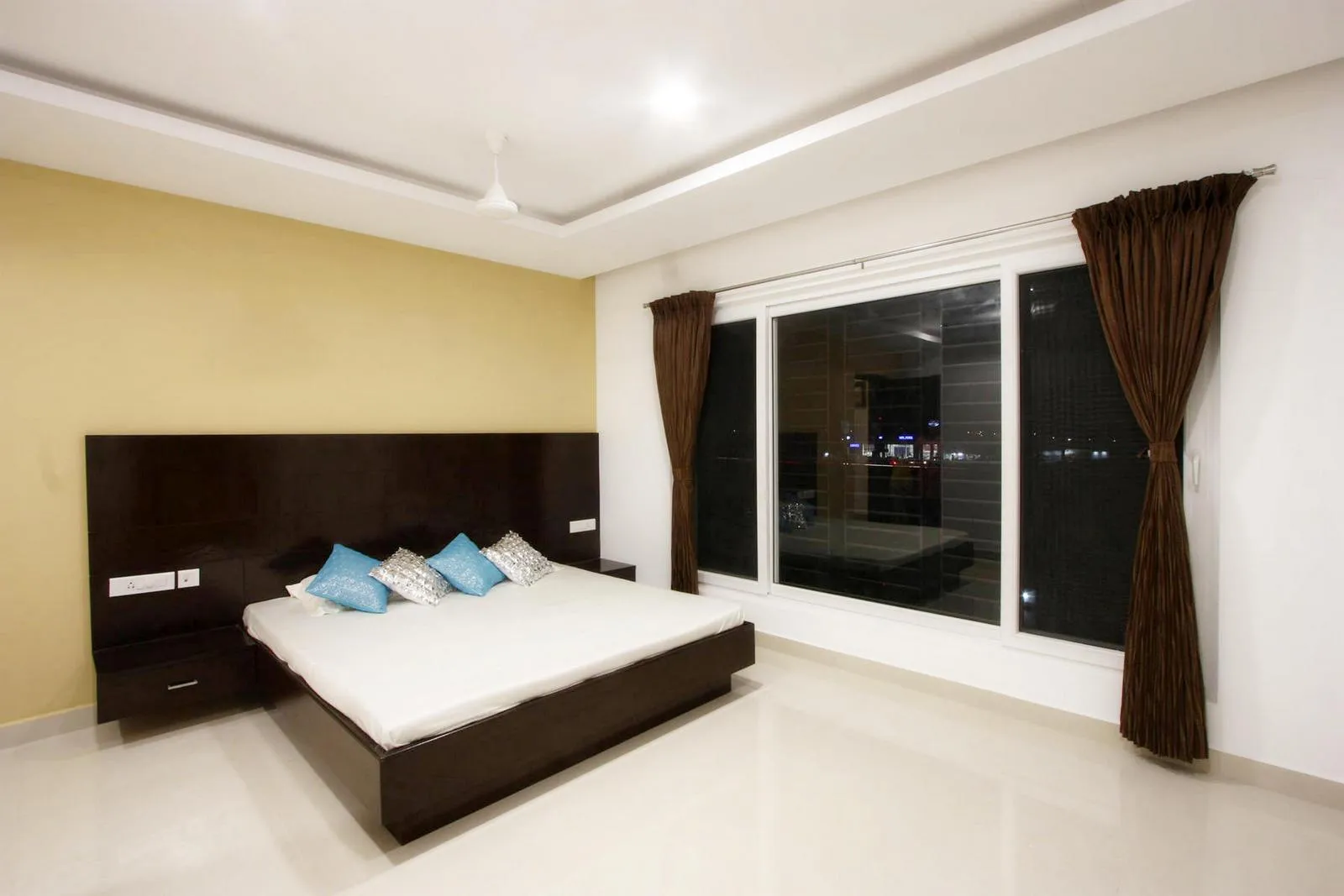
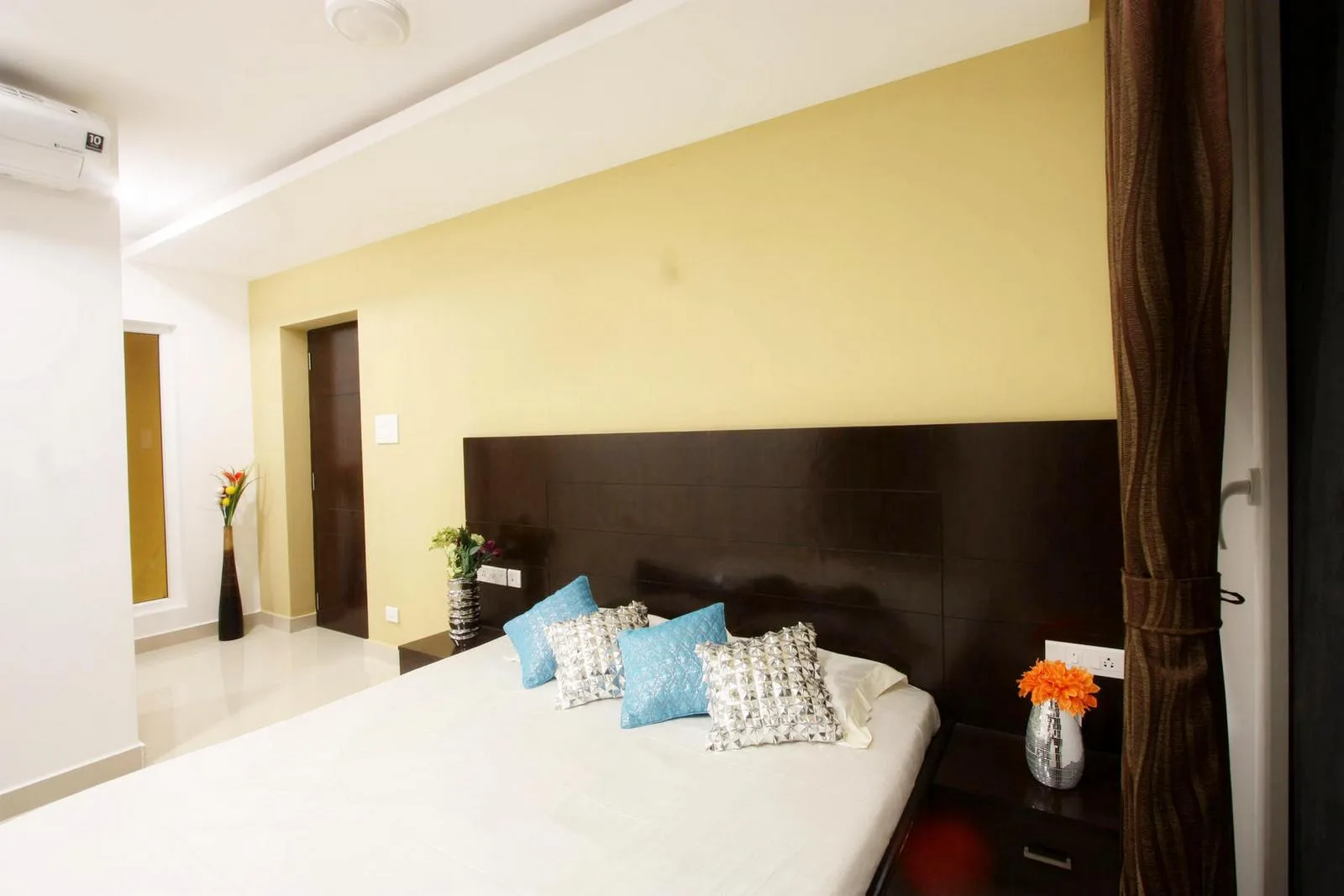
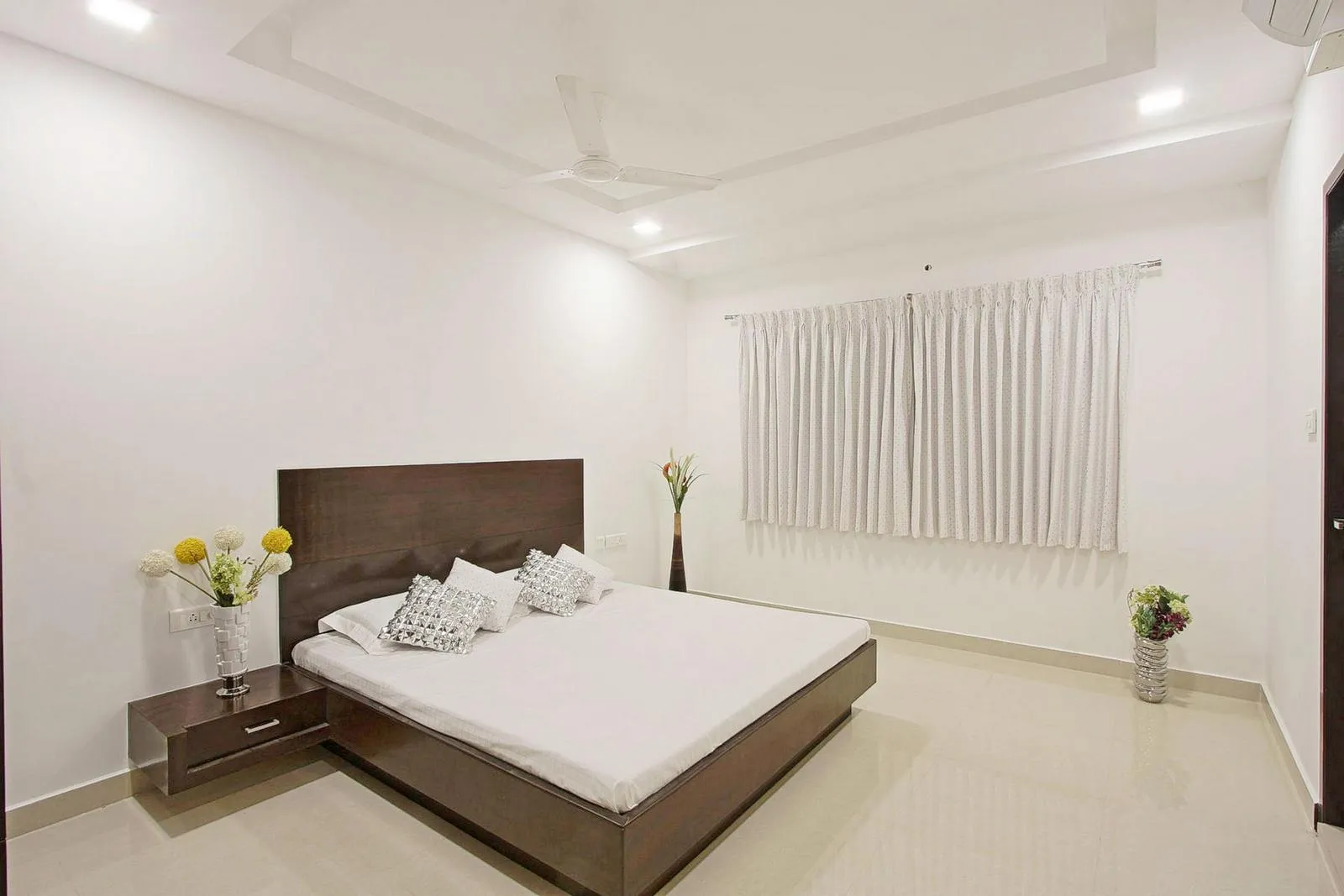
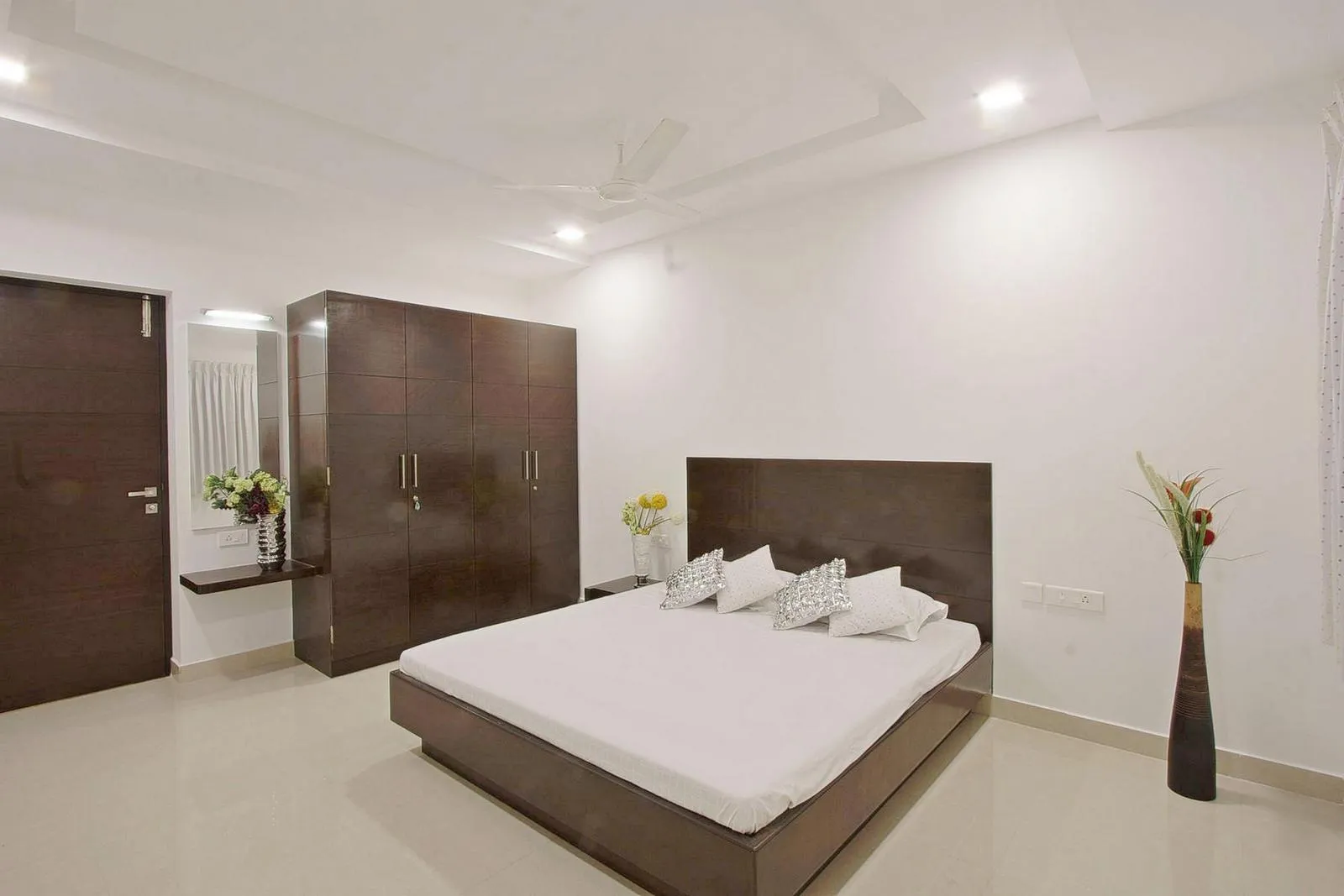
The second floor accommodates two bedrooms, both carefully oriented toward the lake. Large windows are provided to frame the views, allowing residents to enjoy the natural scenery from the privacy of their rooms. Shading elements ensure thermal comfort without compromising visual openness.
Family Lounge / Music Room
In addition to the bedrooms, the second floor includes a small family area that functions as a music room. This flexible space is designed for relaxation, creativity, and informal gatherings, adding a personal and intimate layer to the home.
Material Selection & Budget Strategy
This house was executed within a tight budget, making cost-efficiency a key design driver. Expensive finishes and unnecessary ornamentation were consciously avoided. Instead, materials were selected based on durability, availability, and value for money, ensuring long-term performance without inflating costs.